Oct. 8, 2025
Medical students spread awareness about sun exposure risks
Share this story
At the Virginia Commonwealth University, a student interest group is tackling the most common type of cancer in the U.S. — one Richmond classroom at a time.
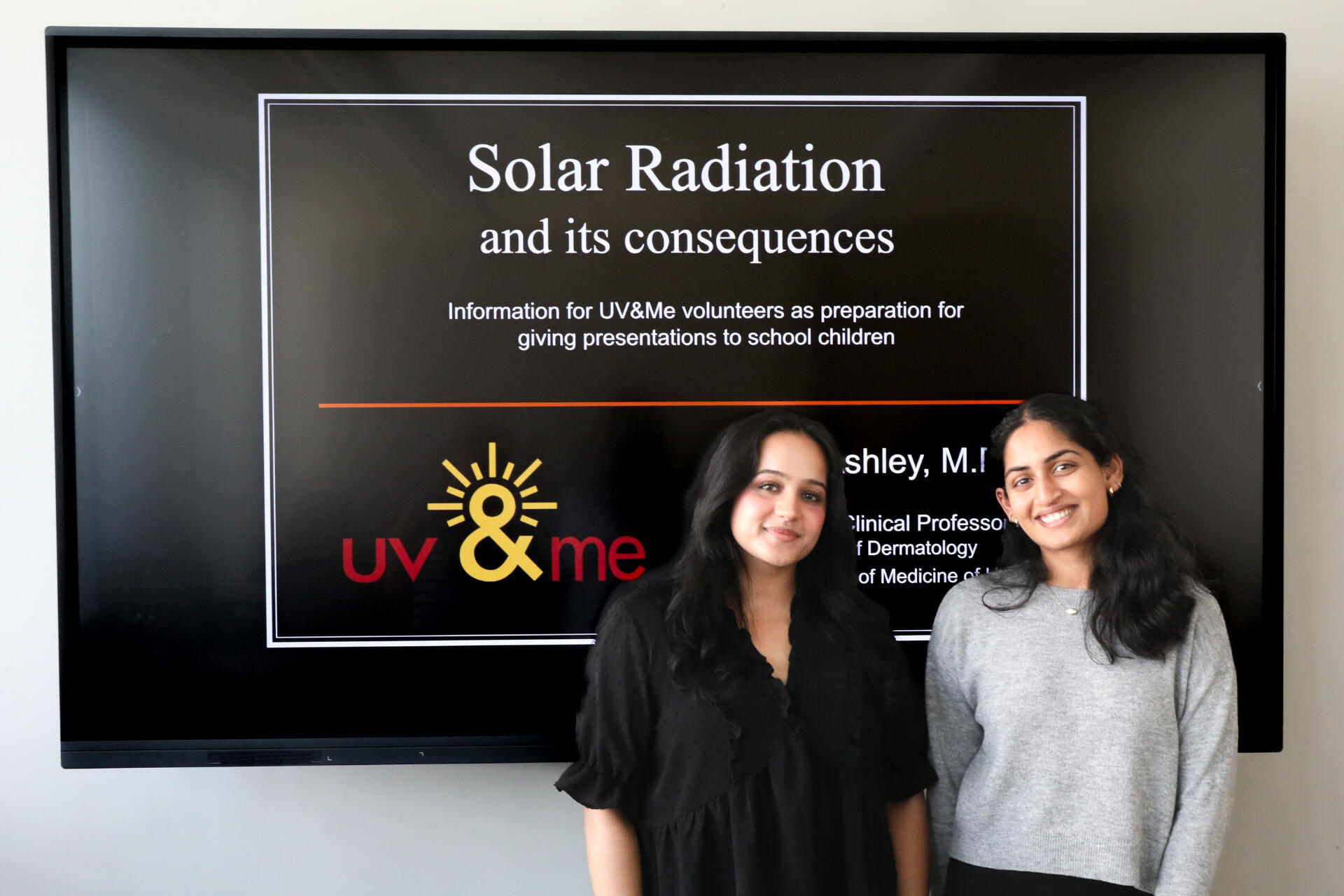
Since its founding last year, UV&Me at the VCU School of Medicine has trained its members to become sun-safety experts. UV&Me is an international nonprofit dedicated to skin cancer prevention, and student-run chapters at medical schools across the U.S. and Canada aim to teach the next generation about sun exposure and its link to skin cancer. Equipped with interactive presentations provided by the international organization, members of the group first attend training sessions and then visit schools in the Richmond area to spread awareness about a disease that 20% of Americans will be diagnosed with by age 70.
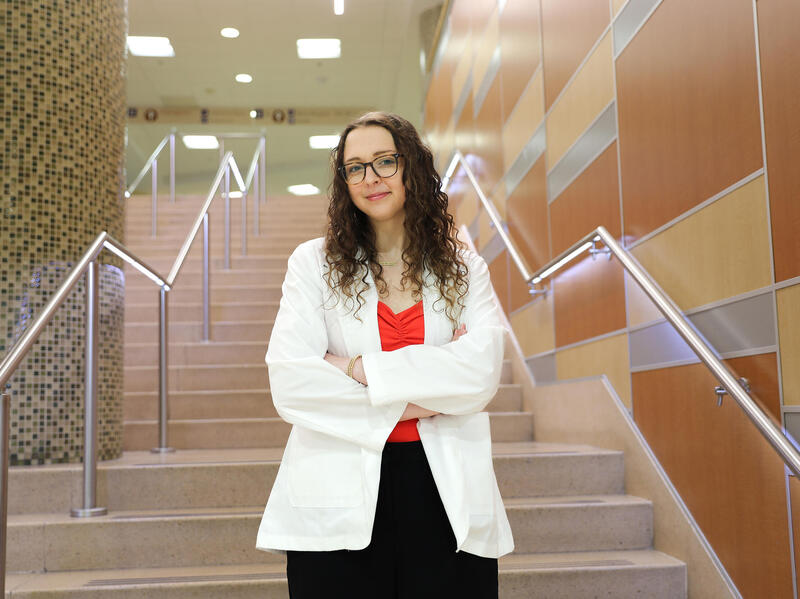
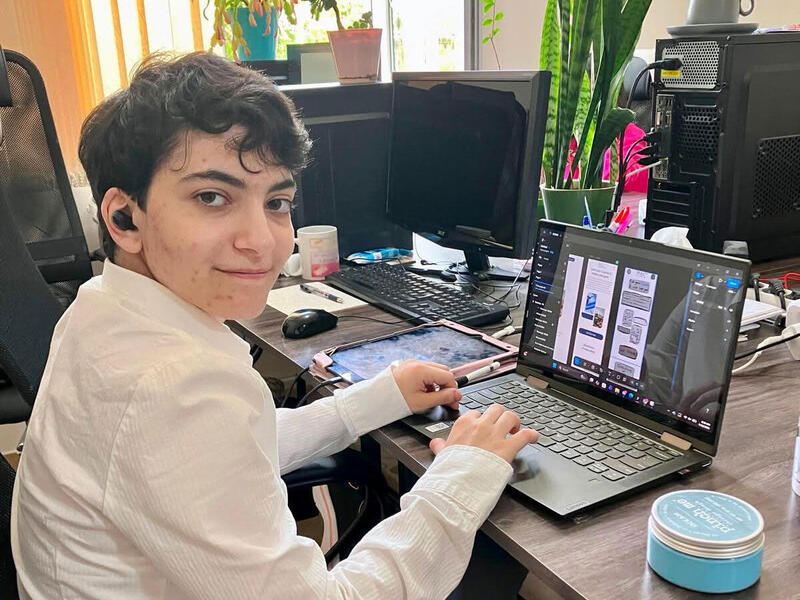
“Skin cancer is preventable, but prevention only works if people truly understand the risks and how to take action,” said Tanvir Dhaliwal, second-year medical student and co-founder of UV&Me at VCU. “With kids and teens, you can really get that message across early and help form sun-safety habits now.”
Filling a gap
Dhaliwal, along with co-founder and fellow second-year Anvita Anumolu, first envisioned a sun-safety student interest group after volunteering with an event hosted by the dermatology student interest group at VCU. Motivated by the potential impact they could make, they set out to take their passion into the community with simple and engaging lessons for young audiences.
“Even though skin cancer is the most diagnosed cancer, there is still a ton of misinformation and lack of knowledge about sun exposure and how it increases your risk of developing the disease,” Anumolu said. “Sun education is an avenue to improve public health literacy.”
For Dhaliwal, the cause is personal. Before medical school, she worked as a medical assistant for Mohs surgery, a procedure used to treat skin cancer, where she witnessed firsthand how the disease affected patients.
“A common theme I heard from patients was that they wished someone had taught them about the risks when they were younger,” Dhaliwal said. “That stayed with me and motivated me to focus on early prevention.”
While the international UV&Me provides training materials and prepared slideshows for participating students, it is up to individual chapters to recruit and train members and volunteers. During these training sessions, medical students learn about the nuances of delivering age-appropriate information to students in different grade levels.
In its first year of operation, UV&Me at VCU primarily delivered presentations to Richmond-area high schools on the science behind how the sun damages skin cells, identifying signs of skin cancer and how to mitigate the risk of development. With this older group, members also presented dermatology as a career option for students to pursue and shared resources on how to join a premedical track. Anumolu said she was surprised by how engaged the high schoolers were, especially with the more scientific materials, like learning the differences between UVA and UVB rays.
“That was the best part and made me want to keep teaching on my radar,” she said.
For Sofiya Blat, a second-year medical student and aspiring pediatrician, educating children on preventive care has given her a preview of her future career. Blat, who serves as UV&Me at VCU’s public relations chair, said she felt there was value in high schoolers hearing from educators who are also still students themselves.
“Most of us aren’t that far removed from that age group and can remember what it was like and what we were concerned about as teens,” Blat said. “We come across more as peers, rather than adults telling kids what to do.”
Teaching high schoolers also means accounting for the social pressure many of them feel to tan, Blat said. To combat this pressure, the group also discusses alternatives to sun and indoor tanning, like spray and self-tans. Blat said she hopes the presentations inspire the high schoolers and arm them with the knowledge and foresight to weigh the risks of sun exposure.
“We can’t control what people do or ban them from going out in the sun,” Blat said. “What we can do is teach them of the potential risks and repercussions, and how to use that information to make better decisions.”
Dispelling the myths
Anumolu and Dhaliwal noted that many of Richmond's public schools have predominantly non-white student bodies. People of color are less likely than white people to be diagnosed with skin cancer, but due to multiple factors, including lower public awareness of skin cancer risks, they are often diagnosed at later stages in the disease. This makes it harder to treat and can lead to worse outcomes.
To combat this disparity, UV&Me presentations feature a range of skin tones and show examples of how skin cancer can present on different people. The goal, Dhaliwal said, is to fill in those awareness gaps at a young age, which she said will help create more equitable health outcomes in the future. UV&Me at VCU presenters also share stories of their own personal experiences with sun education to better relate to their audience.
“Sun protection wasn’t really discussed in my family growing up. I don’t have anyone in my family that has been diagnosed with skin cancer, but that doesn’t mean it isn’t possible,” Anumolu said. “There are misconceptions around who is susceptible to skin cancer and who isn’t. Just because you don’t burn doesn’t mean you’re not at risk.”
The benefits of early sun education are two-fold, Anumolu and Dhaliwal said. While diagnoses usually happen in patients over 50 years old, early and consistent preventive measures, including sunscreen use and limiting sun exposure, are key to minimizing the likelihood of diagnosis. Plus, kids who learn early how to identify common indicators of skin cancer, like the students UV&Me at VCU members meet with, can share their knowledge and help older relatives who are more at risk.
“It’s empowering on both sides,” Dhaliwal said. “The kids walk away with practical steps they can take today, and we get to practice using our skills and sharing our knowledge.”
This story was originally published on the School of Medicine website.
Subscribe to VCU News
Subscribe to VCU News at newsletter.vcu.edu and receive a selection of stories, videos, photos, news clips and event listings in your inbox.