Oct. 16, 2025
VCU team heads to Congress for Rally for Medical Research
Share this story
Six researchers from Virginia Commonwealth University joined colleagues, patients, clinicians and advocates from medical research advocacy organizations and universities across the country recently on Capitol Hill to voice support for funding from the National Institutes of Health.
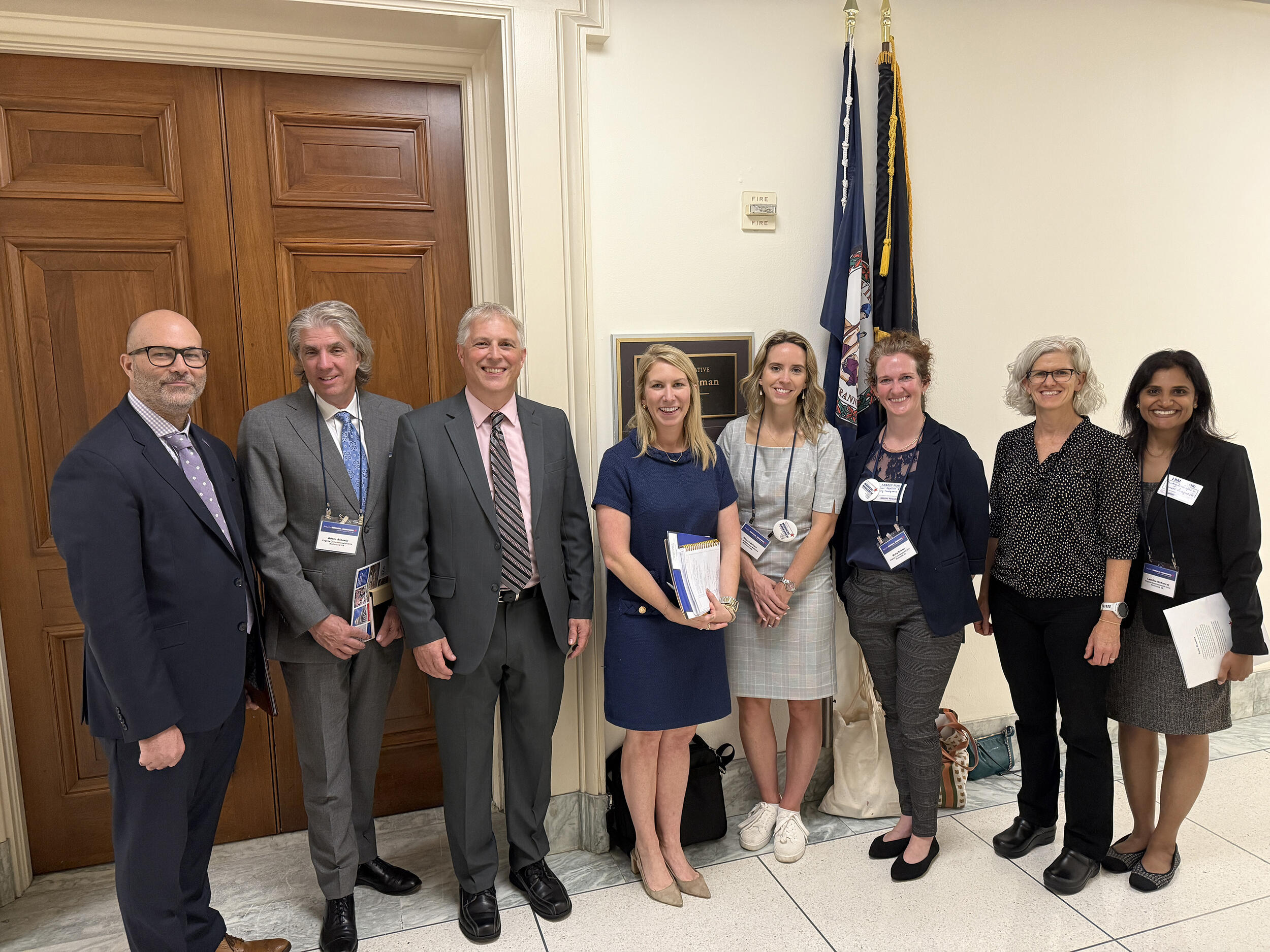
The 13th annual Rally for Medical Research Hill Day was held Sept. 18 in the halls of Congress. Among the VCU participants was Molly Bristol, Ph.D., who had attended last year’s event as well.
“This was the biggest rally they have had in terms of the number of participants,” said Bristol, associate professor in the School of Dentistry and a researcher in its Philips Institute for Oral Health Research. “More than 400 people from over 40 states held 200 meetings with congressional staff and members of Congress.”
The six VCU participants have received NIH funding, and the rally delivered a unified message to Congress that investing in the NIH must remain a national priority. The science it supports has led to longer lives after cancer, breakthroughs in treating heart disease, hope for people living with diabetes and Alzheimer’s, and cutting-edge treatments for rare genetic disorders.
In fiscal year 2025, VCU received $115.7 million in NIH funding, representing a 13% increase from the previous year.
In addition to Bristol, the VCU delegation included Derek Chapman, Ph.D., of the School of Public Health; Adam Atherly, Ph.D., of the College of Health Professions; Alyssa Button Ph.D., of the School of Medicine; Mary Peace McRae, PharmD, Ph.D., of the School of Pharmacy; and Lathika Mohanraj, Ph.D., of the School of Nursing.
Carly Katz, VCU’s assistant vice president of federal government relations in the Office of the President, said the rally helps connect researchers and their crucial work to policymakers.
“What I think is really important about participating is that it puts a face to medical research and NIH grants … to have researchers talk about what they have studied and discovered and to talk to junior faculty who are our future STEM research workforce,” said Katz, who worked with School of Medicine Dean Arturo Saavedra, M.D., Ph.D., to recruit the VCU delegation.
The House and Senate have both approved draft legislation to provide increased funding for the NIH in fiscal year 2026 but have yet to come to agreement on a final amount. The Senate Appropriations Committee proposed $47.2 billion in funding for NIH in fiscal year 2026, a $400 million increase over fiscal year 2025. The House Appropriations Committee has proposed $46.9 billion for the NIH’s base budget, a $99 million increase over fiscal year 2025. Negotiations on final funding levels are on hold while the government is shut down.
“It seems that most of the offices we met with thought NIH funding was incredibly important, but the budget didn’t pass,” Bristol said, noting the delegation met with five congressional offices. “The overall consensus is they don’t want to cut funds to the NIH. They realize the importance that funding does.”
She added that even though she is only one person in the crusade for funding, she realizes that every voice counts – and could make a difference.
“I can go up to Washington, D.C., and say that this is so important,” Bristol said. “It’s the one thing I can do.”
Subscribe to VCU News
Subscribe to VCU News at newsletter.vcu.edu and receive a selection of stories, videos, photos, news clips and event listings in your inbox.