March 5, 2026
Bryant Mangum devoted his career to literature and now he’s sharing his life’s work with VCU
Share this story
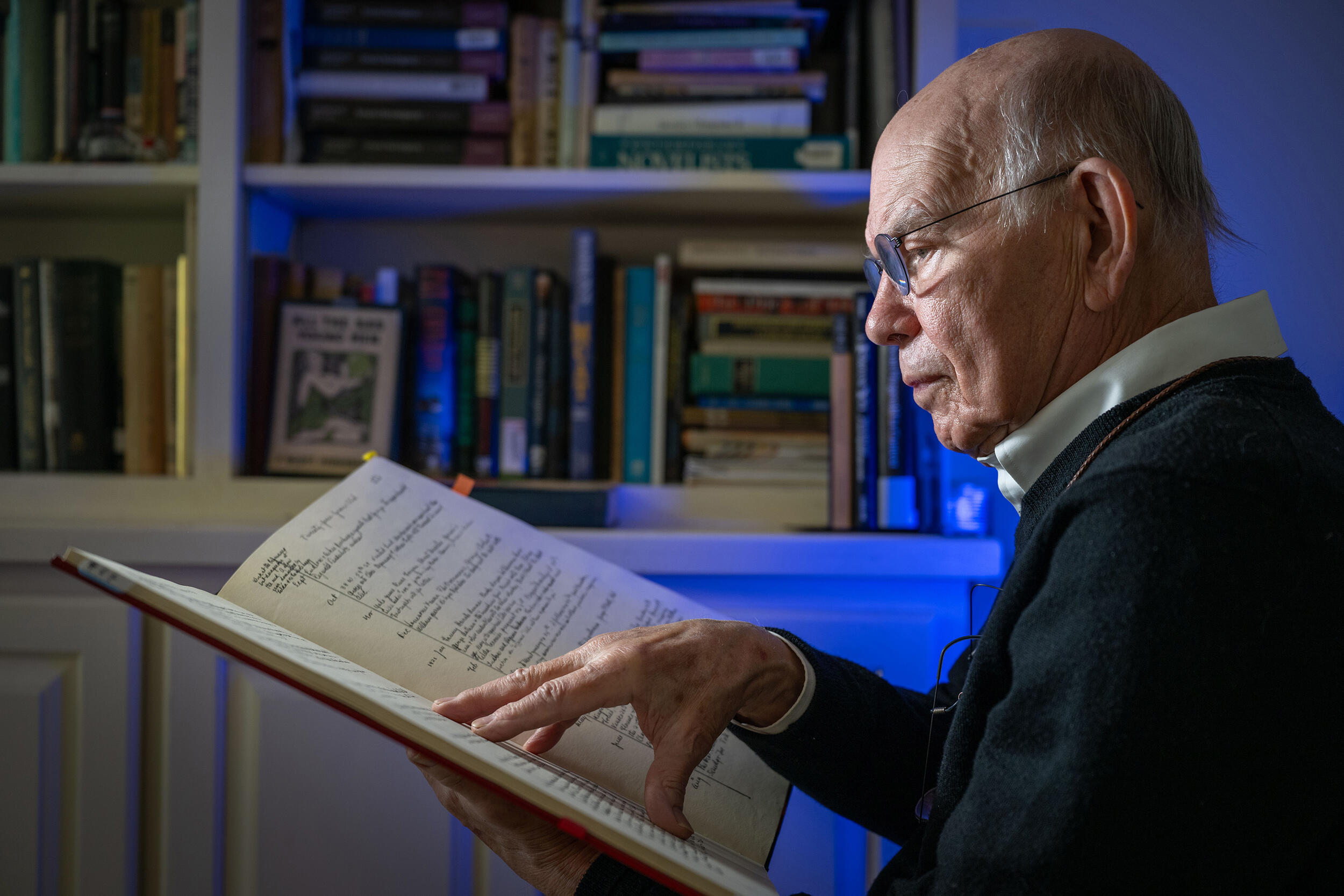
The 80 volumes of books housed in boxes in Bryant Mangum’s home aren’t just any books. They represent a collection that Mangum, emeritus professor of English at Virginia Commonwealth University, has been thoughtfully and carefully building over the years.
An author and prominent F. Scott Fitzgerald scholar, Mangum has gathered and organized the books along with rare magazines, his personal papers and scholarly output to be part of a special donation to the James Branch Cabell Library at VCU.
The book collection features very rare and highly sought-after first editions of the works of Fitzgerald and Alice Adams, the rarest of which is a 1925 first edition of Fitzgerald’s “The Great Gatsby” followed by a first edition of Fitzgerald’s “This Side of Paradise.” Fitzgerald first editions, especially ones with their original cover, can fetch up to six figures in an auction house.
It took Mangum about six months of afternoons and evenings to organize the collection. Much of that time was devoted to verifying the edition and printing of each individual volume included in the seven-box donation.
The archival collection is currently being processed by staff at the James Branch Cabell Library.
“We want to preserve this collection for hundreds of years, make it last for generations to come,” said Chrystal Carpenter, head of Special Collections and Archives at the library, adding she hopes the collection will be fully catalogued by summer.
When Mangum reached out to Carpenter about the donation, she began researching his career at VCU. Mangum taught for 51 years in the Department of English, part of the College of Humanities and Sciences. In a 2022 VCU News story about his retirement, Catherine Ingrassia, Ph.D., dean of the College of Humanities and Sciences, called Mangum “a compassionate teacher, a respected scholar and an exemplary university citizen” who left an indelible mark on his students and VCU as a whole.
“It was wonderful to learn more about him and his influence with students at the university,” Carpenter said, noting that James Branch Cabell, the library’s namesake, also had some original Fitzgerald books in his collection. “He is such a gift. Because he is a Fitzgerald scholar, having all of these originals is fantastic.”
When anyone donates a collection to the library, Carpenter is very mindful of the donor’s feelings, especially if it is that person’s lifework, which this is.
“We recognize it’s a change of an era, a transition,” she said. “We take into consideration the real emotions that go with this.”
A lifelong love of literature
Mangum’s strong ties to reading trace back to his early youth in the small remote South Carolina town of Ruby. His mother, like many mothers, used to read to him.
“There were very few distractions or diversions — and, of course, no television. This environment was ideal for my mother, whose favorite diversion was reading,” he said, noting his mother was a first-grade teacher. “She made certain that as a child I was read to often, if not by her, then by my babysitters or caretakers.”
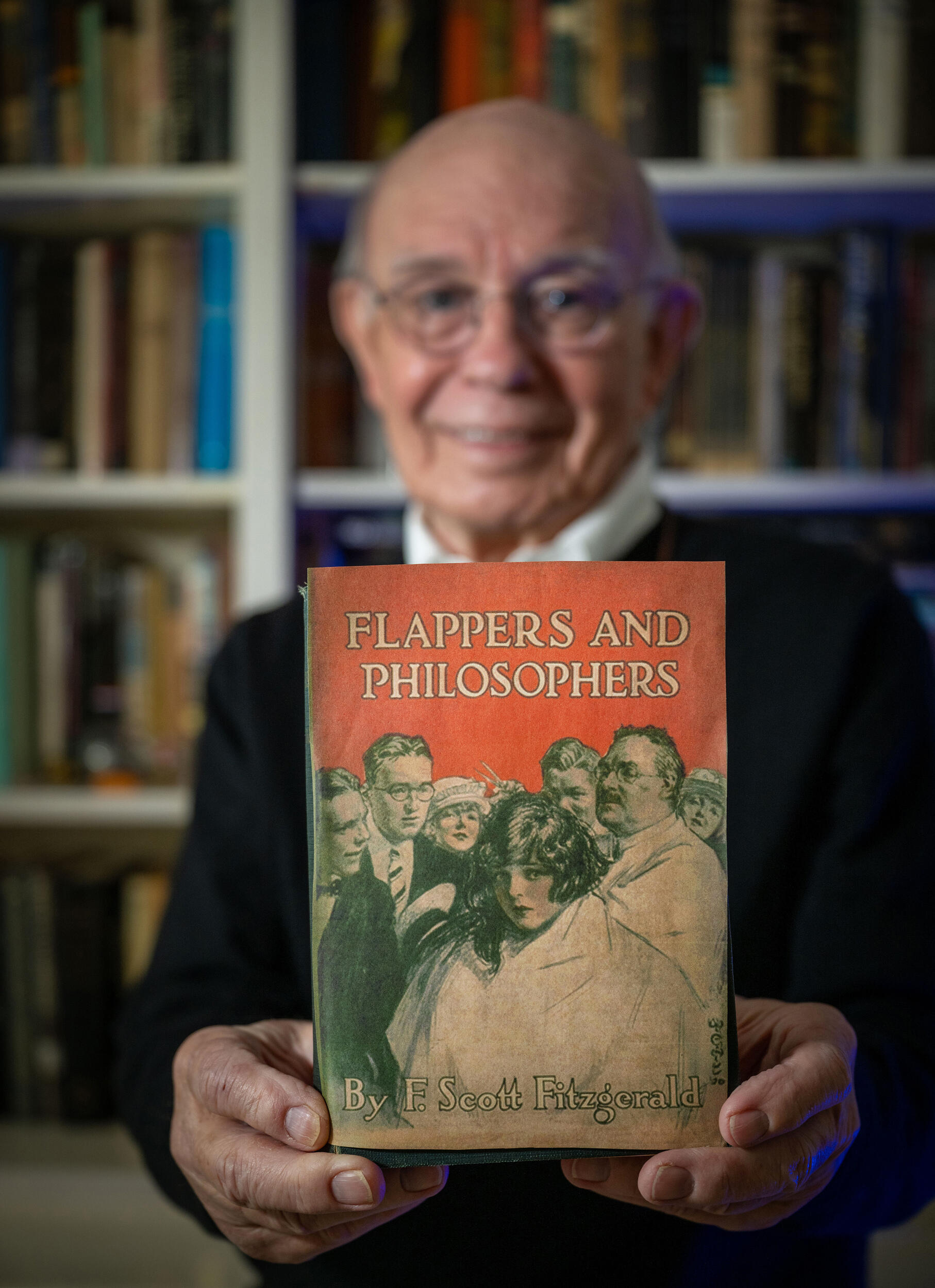
Reading was also important to his father, whose roles included serving as superintendent of schools. About the time of Mangum’s sixth or seventh birthday, his father gave him a collection of Jack London’s stories.
“So, I know he was acquainted with the literary world,” Mangum said. “He often quoted Edgar Allan Poe, whose poetry he loved. And so, from an early age I came to have an appreciation of the written word.”
Mangum had read, or had read to him, most of the books in the Nancy Drew and the Hardy Boys series and it was those books that “likely ‘hooked me’ on reading,” he said.
When he was in the ninth grade, his English teacher introduced him to Charles Dickens — specifically to “Great Expectations.”
“I was mesmerized by that book,” he said, adding a friend of the family also gave him a set of Dickens books in vintage bindings. “This was the beginning of my fascination with not only reading, but of collecting books.”
Mangum didn’t start to focus on specific writers of American literature of the early 20th century such as Fitzgerald and Ernest Hemingway, another favorite of his, until he was in graduate school at the University of South Carolina.
As it happened the scholar, Matthew J. Bruccoli, known then as a world expert on both Hemingway and Fitzgerald, had just joined the USC faculty.
“He became my mentor and the director of my Ph.D. dissertation,” Mangum said.
Mangum said graduate students in literature soon learn the best way to get to “know an author — their ways of thinking, their methods of composition, their sensibility — is through a very careful study of that author’s words as encountered on the page.”
That complex process involves the study of various printings and reprintings of an author’s work, examining the differences in wording and phrasing within works that are reprintings of the same work.
“This is the way my interest in collecting the many printings and reprintings of Fitzgerald’s works that are contained in the Bryant Mangum Collection developed,” he said.
A collection to inspire scholars and others
Mangum’s donated collection contains first editions of every Fitzgerald work published during his lifetime, including a first printing of the first edition of “The Great Gatsby.”
“There were only two printings of that first edition. I was lucky as a grad student to be the first person to arrive early one morning at a book sale that had advertised what was to become my amazing find, and I was able to purchase it at an affordable price before anyone had been able to verify the rarity of the volume,” he said.
The collection will allow students to understand how Fitzgerald’s cultural insights developed and evolved.
“This collection in the Cabell Library allows me to continue my professional life, carrying it forward to teach in much the way that I have done it in my years on the VCU English faculty — as learner, teacher and scholar, though missing deeply, however, the personal contact with the thousands and thousands of students that it has been my delight to work with,” Mangum said.
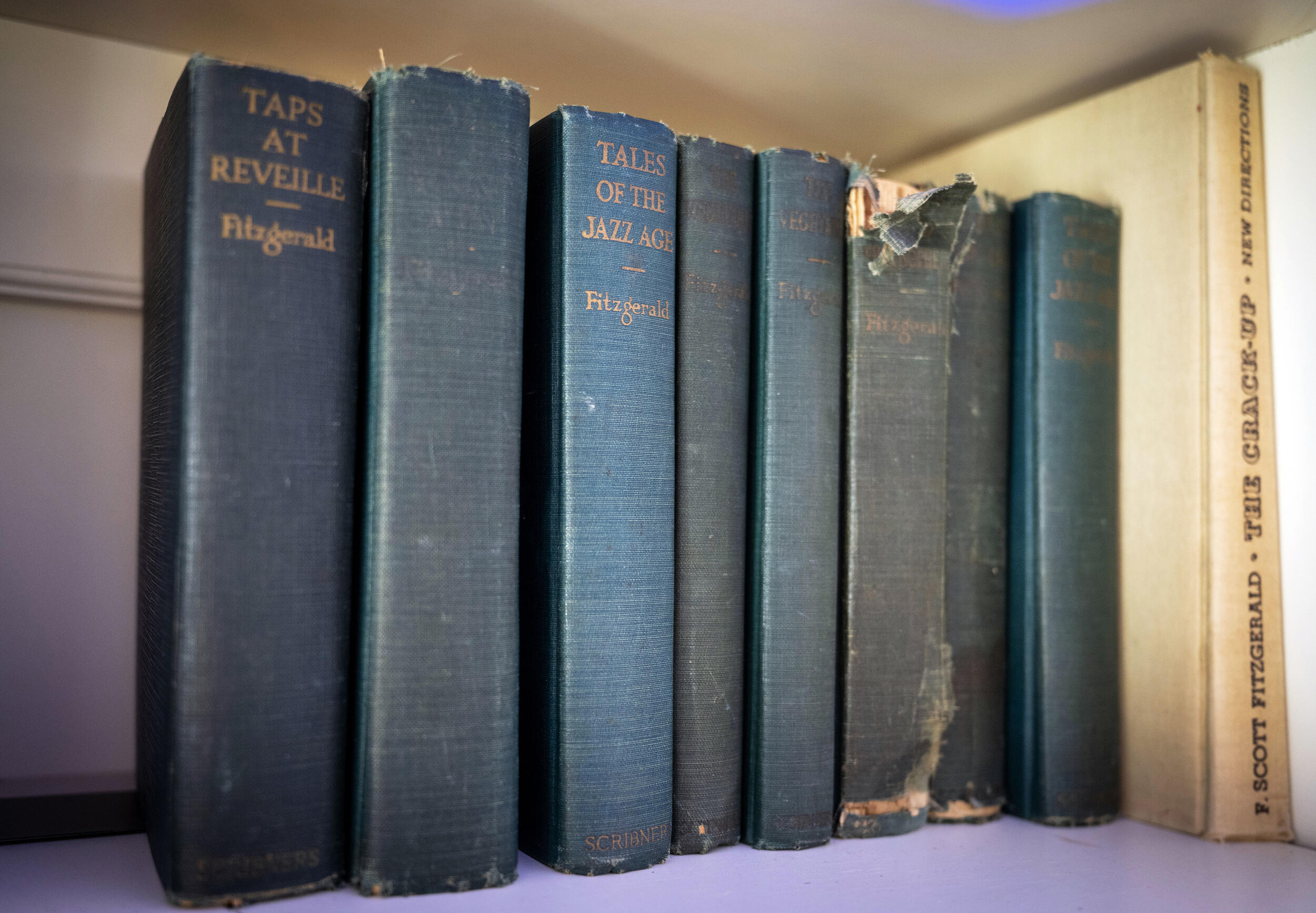
Mangum’s daughter, Charlotte Wincott, points to her father’s own work as the most important pieces in the collection. Mangum is the author or editor of four books — one on Alice Adams and three on Fitzgerald.
“He has made tremendous contributions to the understanding of 20th century American literature,” said Wincott, a filmmaker with a Ph.D. in neuroscience. “The collection will hopefully provide some incentives for scholars from other institutions to come to VCU to take a look at books and materials not available at most university libraries.”
For as long as she can remember, her father has been “submerged in his scholarly work on Fitzgerald as well as his teaching materials for the courses he has taught on American literature,” she said, adding that the first editions he has collected have been inspirational to him and his students.
“I am so happy that he donated his collection and work so that new students can continue to be inspired by these writers into the 21st century and beyond,” she said.
Carpenter agrees, noting that the collection enriches the library today “as both a remarkable scholarly resource and a deeply meaningful gift to our community.”
“Its depth and breadth strengthen our research mission, offering students, faculty, scholars and readers a window into decades of thoughtful literary scholarship,” she said. “Preserving this collection ensures that future generations will continue to learn from Dr. Mangum’s literary insights and build on the foundation he has created.”
Subscribe to VCU News
Subscribe to VCU News at newsletter.vcu.edu and receive a selection of stories, videos, photos, news clips and event listings in your inbox.