Dec. 12, 2025
Class of 2025: Chelsea Rushbrook finds, and shares, success in recovery
Share this story
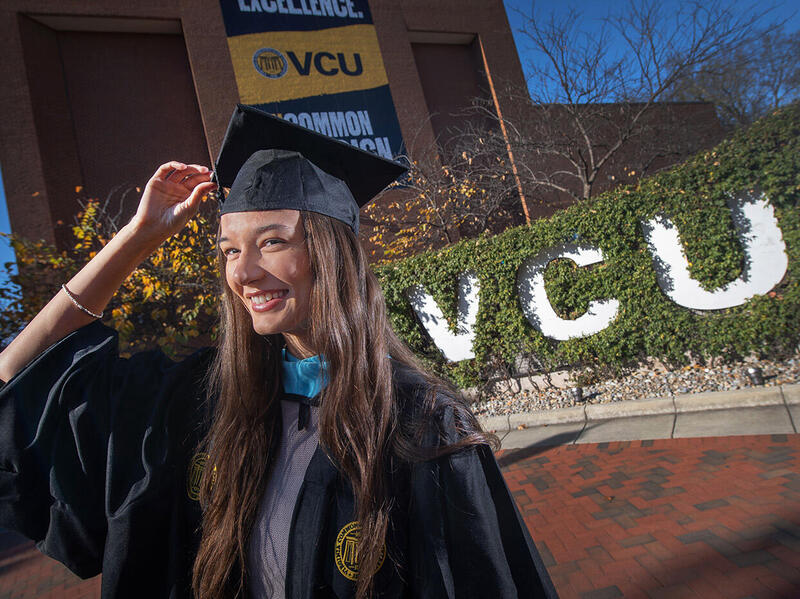
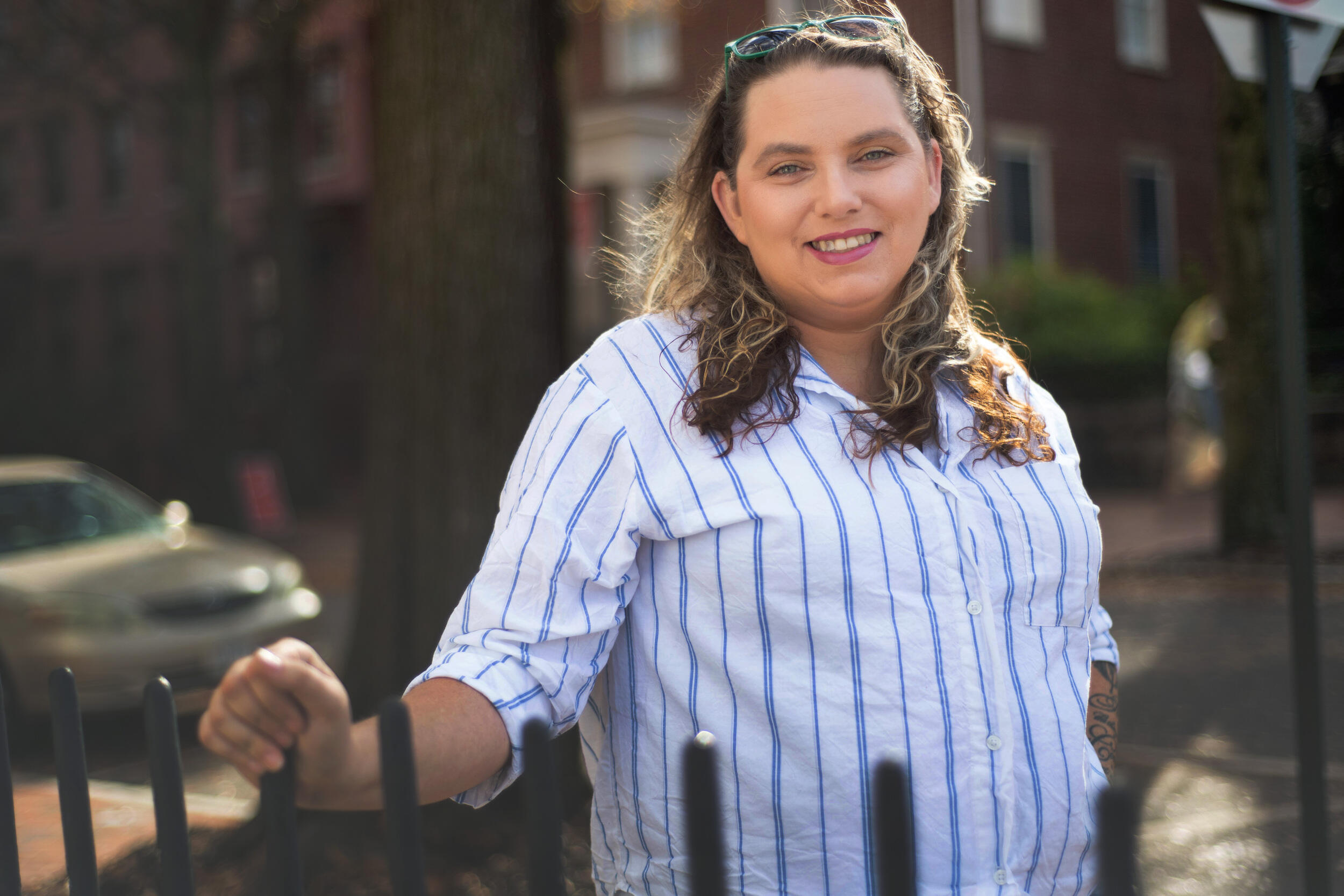
Chelsea Rushbrook is celebrating two milestones this season. November marked her sixth year in recovery. And this month, that journey – which sparked her interest in psychology and led her to Virginia Commonwealth University – will add another highlight as she earns her undergraduate degree at age 37.
“Taking the drugs made me feel a lightness that I never had. The stress was gone and life was just better – until it wasn’t,” said Rushbrook, who focused on addiction studies as part of her psychology major and also minored in sociology in the College of Humanities and Sciences. She wanted to explore “why I did what I did. I wanted to help others who were having trouble.”
Beyond academics, her commitment has included work with Rams in Recovery, 2 End the Stigma and the JHW Foundation, a nonprofit that helps young adults in recovery. And her passion was years in the making.
Rushbrook started drinking at age 16 and was introduced to prescription Oxycodone for pain relief after having her wisdom teeth removed. Over time, she advanced to illicit substances.
She had enrolled in community college in Northern Virginia in 2006 but left before finishing her business management coursework. Ten years later, she joined the Army, serving for two years before relapsing. Six arrests followed over several years.
“My only rehab over the years was incarceration,” Rushbrook said. “During my last incarceration, I started thinking that something has got to change.”
It did.
In Richmond, she discovered the McShin Foundation, whose recovery services include peer-to-peer support programs.
“It was a shot in the dark, but when I got in the recovery community, my whole life changed. I didn’t know it could be such an inclusive community,” Rushbrook said.
She also found renewed purpose by volunteering with AmeriCorps, the federal agency for national service. In 2024, Rushbrook was awarded the President’s Lifetime Achievement Award for completing more than 5,000 hours of service to the country.
“That was a real high point in my recovery,” she said.
Through McShin and AmeriCorps, Rushbrook said she could reinvent herself and build self-confidence.
“I learned how to be an adult with substance use and understand that I am a person in long-term recovery,” she said. “They helped me really build the belief system I have in myself and my values. They allowed me to do something for the community and to be me.”
Rushbrook transferred to VCU in 2024 after completing her associate degree from Northern Virginia Community College and earning a career studies certificate and a substance use counseling certificate from Reynolds Community College. With those credentials, she started her current full-time job as a certified peer recovery specialist at Central State Hospital in Petersburg.
At VCU, she has won several scholarships, including the 2024-25 Friends of VCU Libraries Scholarship.
“I never thought I was going to get it. I knew there was only one recipient on the Monroe Park Campus,” said Rushbrook, a single mom who was brought to tears by the scholarship and its monetary award. “The money changed my Christmas last year.”
This year, she used a compelling part of her academic journey – her experience in applying to VCU with a criminal history – and turned it into a workshop she presented at the Association of Recovery in Higher Education conference in New Orleans.
After graduation, Rushbrook will take a year away from academics to rest and re-energize –
“I have been going nonstop for four years, and I am tired,” she said – but she has big plans.
“My ultimate goal is to get a doctorate in forensic psychology so that I can be a substance use counselor,” Rushbrook said. “Being able to live my recovery out loud and share my lived experience and struggles, fighting the system, it all matters. I do this because every person matters.”
Subscribe to VCU News
Subscribe to VCU News at newsletter.vcu.edu and receive a selection of stories, videos, photos, news clips and event listings in your inbox.