March 11, 2026
How an innovative idea led to better-timed pedestrian crosswalk signals on VCU’s campus
Share this story
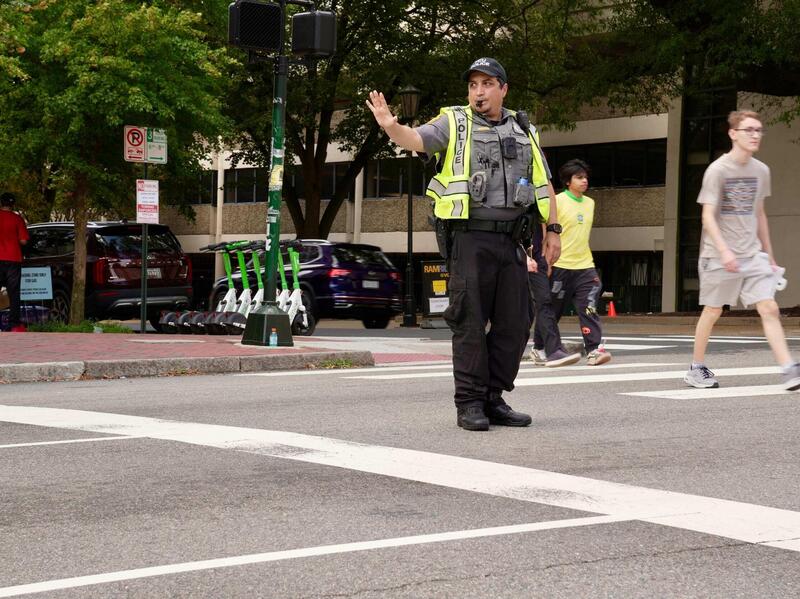
As a crime analyst and supervisor of VCU Police’s Safety Ambassadors, Brian Sussman wanted to make sure his team — five unarmed, civilian employees who respond to calls on Virginia Commonwealth University’s campus that do not require a police officer — were patrolling when and where they would be most needed.
So Sussman worked with VCU’s Office of Institutional Research and Decision Support to analyze enrollment and class scheduling data showing the exact times of day with the highest enrollment on the Monroe Park Campus. (No personal identifying information was included in the data.)
“For example, last semester on Tuesdays and Thursdays at 10:45 a.m., there were approximately 5,300 and 5,200 students, respectively, moving across campus,” Sussman said. “This surge occurred because the majority of classes began at 11 a.m.”
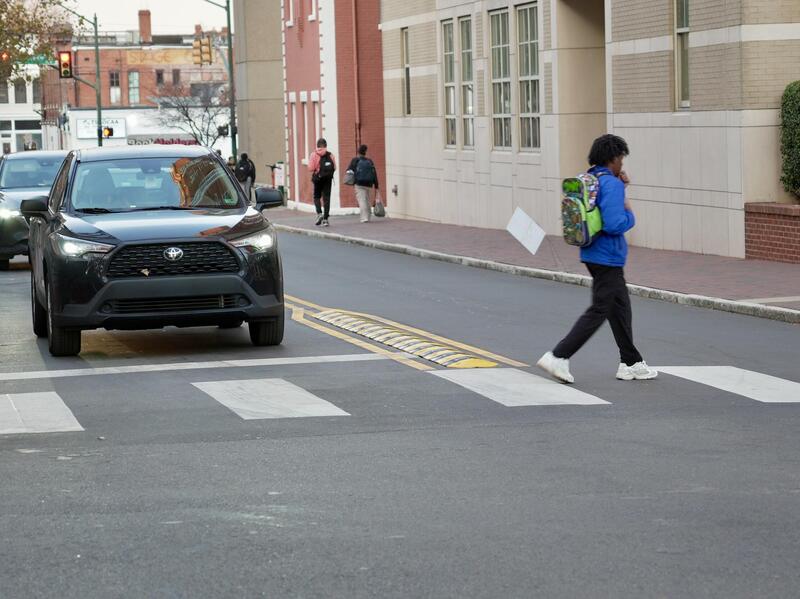
Using that data, Sussman strategically positioned Safety Ambassadors at the campus’ busiest intersections during peak times. They quickly saw just how hazardous these crossings were for students.
One intersection in particular, Main Street and Linden Street, stood out as especially congested. At that time, vehicles were given 55 seconds to move through the intersection, while students had only 25 seconds to cross.
After identifying this imbalance, Sussman contacted a traffic signal engineer with the city of Richmond, and they adjusted the signal timing to prioritize pedestrian traffic. Now, during the most critical 15-minute window — Tuesdays and Thursdays from 10:45 to 11 a.m. — it’s pedestrians who have 55 seconds to cross, while vehicles have 25 seconds. The city also added more time for pedestrians (35 seconds) to cross from 9:30 a.m. to 3 p.m. daily.
Using VCU Police’s camera system, Sussman then conducted a physical count of students to compare crossings before and after the pedestrian signal timing adjustment.
“As a result of the change, approximately 300 additional students were able to cross safely during that peak period,” he said. “This data-driven approach allowed us to deploy limited resources more effectively while significantly improving pedestrian safety during the busiest times on campus.”
After the successful pilot project this past fall, Sussman received the green light to study other intersections and request that the city adjust pedestrian signal timing based on his findings. As a result, signal timing been optimized for pedestrian safety at three additional intersections:
- Franklin and Shafer streets.
- Franklin and Laurel streets.
- Main and Laurel streets.
“It's really a great use of data to enhance pedestrian safety,” said Jeff Eastman, university planner in the Planning and Design division of VCU Facilities Management and a member of the VCU pedestrian safety team. “In my opinion, if they aren't already doing this, other urban universities could greatly benefit from this idea.”
A partnership with the city of Richmond
The pedestrian signal retiming initiative is just one piece of a significant and ongoing effort by VCU, VCU Health and the city of Richmond to improve safety for everyone who walks, drives, bikes or scoots across campus.
In 2023, VCU completed a pedestrian safety study, in partnership with the city’s Department of Public Works, that identified and prioritized pedestrian safety improvements on VCU’s Monroe Park and MCV campuses and in downtown Richmond.
A formal partnership between VCU and the city related to pedestrian safety has been underway for more than three years.
In early January this year, Richmond Mayor Danny Avula announced a series of immediate and accelerated actions to improve pedestrian safety following the deaths of six pedestrians that occurred in the preceding three weeks. VCU and VCU Health have been working with the city to make progress toward Vision Zero, the city’s strategy to eliminate all traffic fatalities and severe injuries while promoting safe, healthy and equitable mobility for everyone.
“We want to be the safest urban campus in the country for pedestrians, and we're just not there yet,” Meredith Weiss, Ph.D., senior vice president for finance and administration and chief financial officer, said in late February at a joint meeting of the VCU Board of Visitors and the VCU Health Board of Directors. “And so we need to work across our enterprise and with the city to get there.”
Dozens of infrastructure projects – including retimed traffic lights, improved pedestrian crossing signage, curb extensions, turn hardening and a red light camera at the intersection of Cary and Belvidere streets – have been completed to make VCU’s campuses safer for travel.
VCU and the city are working together on many more improvements in the months ahead, including:
- Curb extensions at eight new intersections.
- An extension of the existing Franklin Street bike lane from Belvidere Street to Lombardy Street.
- Extending crossing times by 20 seconds in periods of high pedestrian traffic for additional intersections, including on Harrison Street.
- An East Leigh Street streetscape project on the MCV Campus that will include signal improvements and protected pedestrian and bike paths.
VCU provides an updated list of pedestrian safety projects that have been completed, are planned or underway, and that are under discussion. The full list is available here.
Operation Safer Streets
In addition to the infrastructure improvements, VCU Police have intensified traffic enforcement, launching a 90-day special initiative called Operation Safer Streets in early January.
“This operation goes beyond issuing tickets. Our traffic division – under the leadership of Lt. Edgar Greer – is tracking exactly where drivers are committing the most infractions, and what types. This data will be analyzed by our new crime analysis person to ensure we deploy our resources accurately, as we work to deter unsafe driving behaviors that are unfortunately rampant in our city,” said Clarence T. Hunter Jr., chief of police at VCU.
As part of Operation Safer Streets, VCU police officers have, as of March 6, made 1,127 traffic-related stops, resulting in:
- 510 speeding violations.
- 182 highway sign violations.
- 148 red light violations.
- 13 seatbelt violations.
- More than 400 state inspection, driver’s license, equipment and other administrative offenses.
Those figures, in just two months, reflect an acceleration of traffic enforcement compared with the full 2024-25 academic year, which saw a significant 1,774 traffic summons issued.
Each year since 2023, the VCU community has identified pedestrian safety as the No. 1 safety concern for VCU and VCU Health, according to VCU Police’s annual perception of safety survey.
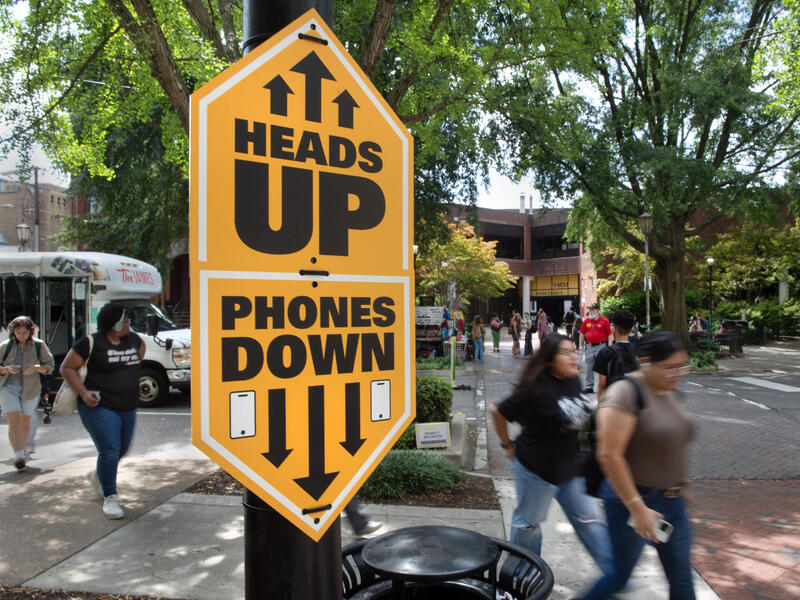
In addition to enforcement, VCU Police have ramped up outreach and education efforts about pedestrian safety, a social media campaign called Heads Up, Rams!, and data collection and analysis.
‘Pedestrian scramble’
In addition to using enrollment and class scheduling data to optimize the pedestrian signal timing, Sussman also used it in a similar way to improve safety at the intersection of Cathedral Place and Laurel Street.
The data showed that roughly 50% of Monroe Park Campus residents live east of Laurel and cross it to access classrooms, dining halls and other campus locations. With such a high volume of travelers, Sussman successfully advocated for the site to be converted to a pedestrian “scramble” intersection.
“A scramble intersection temporarily stops all vehicular traffic during a signal cycle, allowing pedestrians to cross in every direction at the same time without vehicle interference,” Sussman said. “This significantly enhances pedestrian safety and reduces conflict points between vehicles and foot traffic.”
Given the positive impact so far of the scramble intersection at Cathedral and Laurel, VCU and the city are exploring the possibility of similar changes at these other spots on campus:
- Monroe Park Campus
- Laurel and Franklin streets.
- Laurel and Main streets.
- Grace and Shafer streets.
- *MCV Campus
- 11th and Marshall streets.
- 10th and Leigh streets.
By evaluating data and acting accordingly, Sussman said, VCU, VCU Health and the city can create a safer environment for students, faculty, staff and the Richmond community.
“Improving pedestrian safety is not a single project; it is an ongoing commitment, and this is just the beginning,” he said.
Subscribe to VCU News
Subscribe to VCU News at newsletter.vcu.edu and receive a selection of stories, videos, photos, news clips and event listings in your inbox.