Sept. 11, 2025
His tiny invention could put a wrap on one of surgery’s painstaking challenges
Share this story
About Uncommon Heroes: This series shines a light on passionate and innovative people at VCU who are boldly tackling problems that others can’t or won’t.
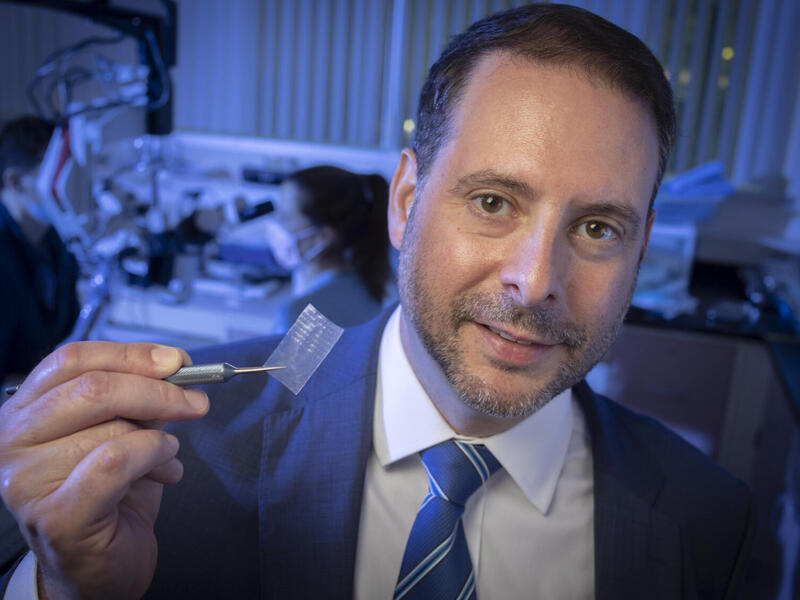
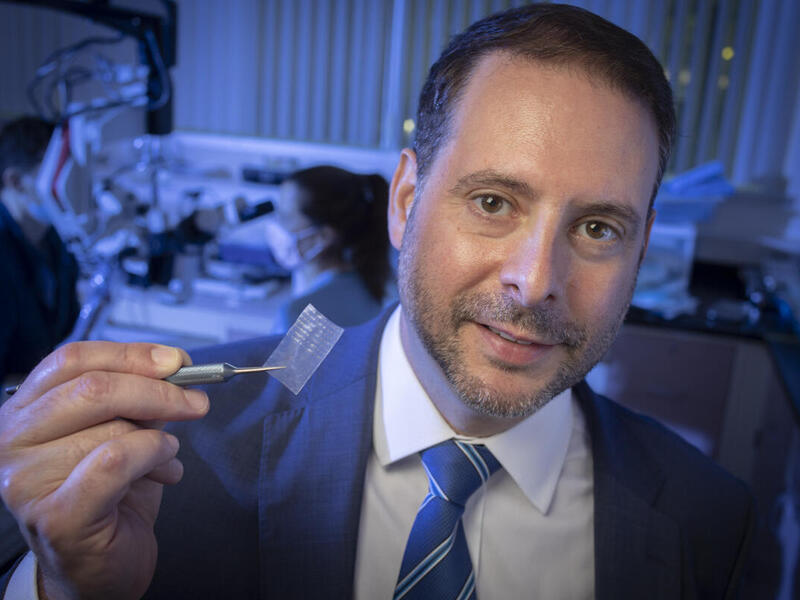
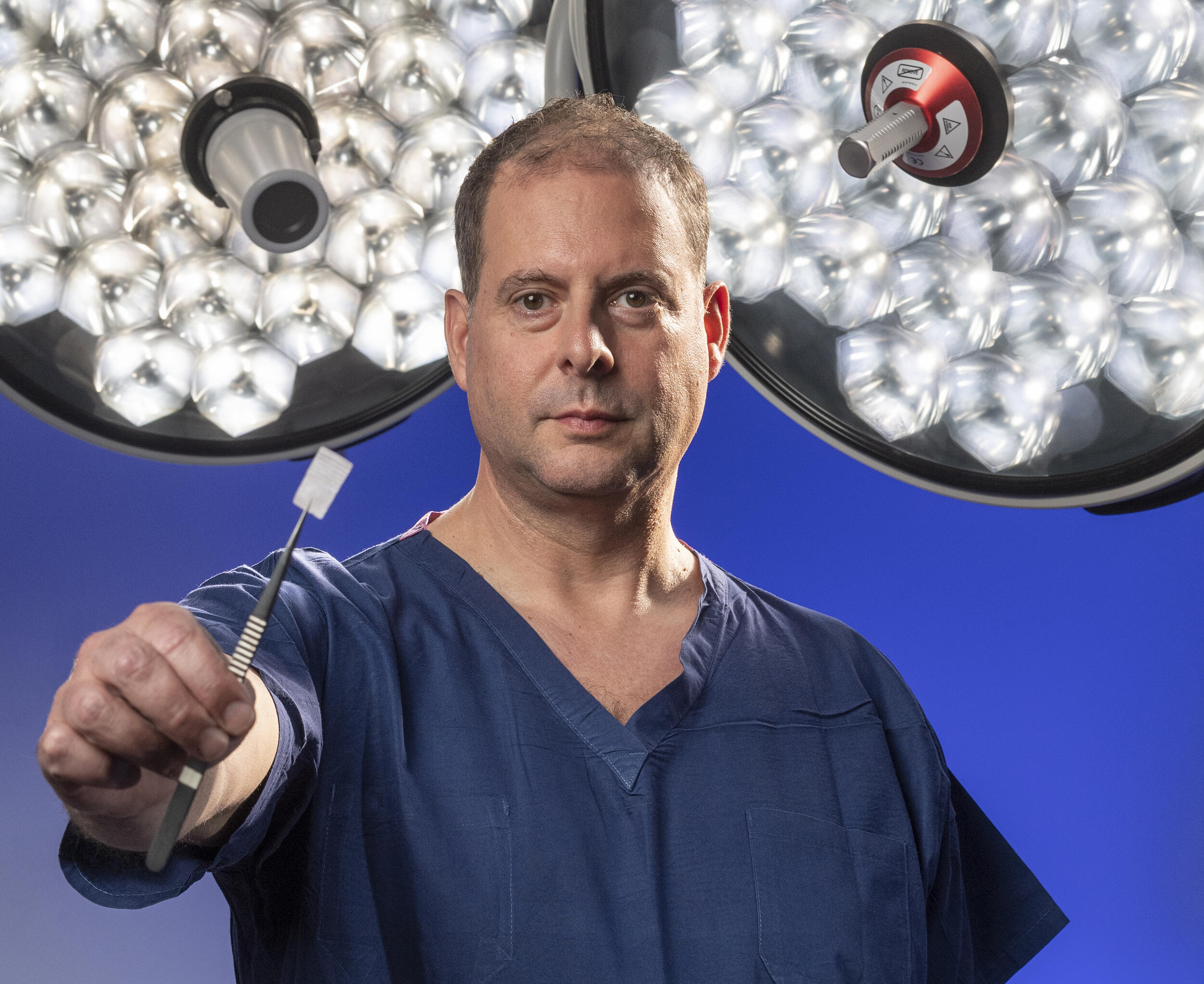
What do fishing hooks, jewelry and scotch tape have in common? They all played a part in the development of Nerve Tape, a tiny biologic wrap that could revolutionize surgery.
Fifteen years ago, Jonathan Isaacs, M.D., a professor in the Virginia Commonwealth University School of Medicine’s Department of Orthopaedic Surgery and chair of VCU Health’s Division of Hand Surgery, set his sights on solving a maddening problem: When faced with repairing severed peripheral nerves – a condition that can happen, for example, as a result of a mastectomy or even a bad fall – even the most skilled surgeons could only promise patients a 50-50 chance at full recovery.
“Fifty percent. That’s been the reality for decades,” Isaacs said. “That wasn’t good enough.”
For more than a century, the “gold standard” in nerve repair was suturing, a painstaking process of sewing together miniscule, delicate nerve ends. It was slow, technically demanding and often resulted in poor alignment, weakening recovery.
For Nerve Tape, Isaacs began with sketching ideas at his kitchen table. He wondered if severed nerve ends could be joined without sutures, and he built prototypes with tiny fishing hooks and, later, delicate gold hooks from a fine jewelry designer.
With support from VCU, Isaacs was able to work with a medical device partner, moving his tapelike idea into production and, ultimately, into operating rooms worldwide. Nerve Tape has now been used in more than 2,500 surgeries across a range of specialties, from breast reconstruction to oral surgery.
In the video below, Isaacs explains how Nerve Tape works, and how the people and support at VCU inspired him to be not just a practicing surgeon but a researcher with potential to be an uncommon hero, changing the future of surgery.
“It’s humbling,” he said. “If this becomes the new standard, it won’t just improve surgery. It will improve lives.”
Subscribe to VCU News
Subscribe to VCU News at newsletter.vcu.edu and receive a selection of stories, videos, photos, news clips and event listings in your inbox.