Oct. 20, 2025
Family, war and a tsunami propel ‘Tall Water,’ SJ Sindu’s new graphic novel
Share this story
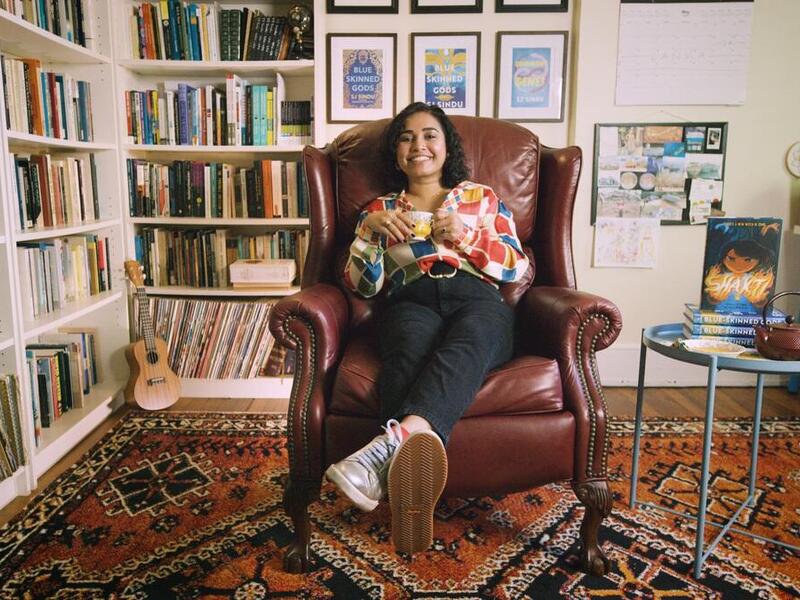
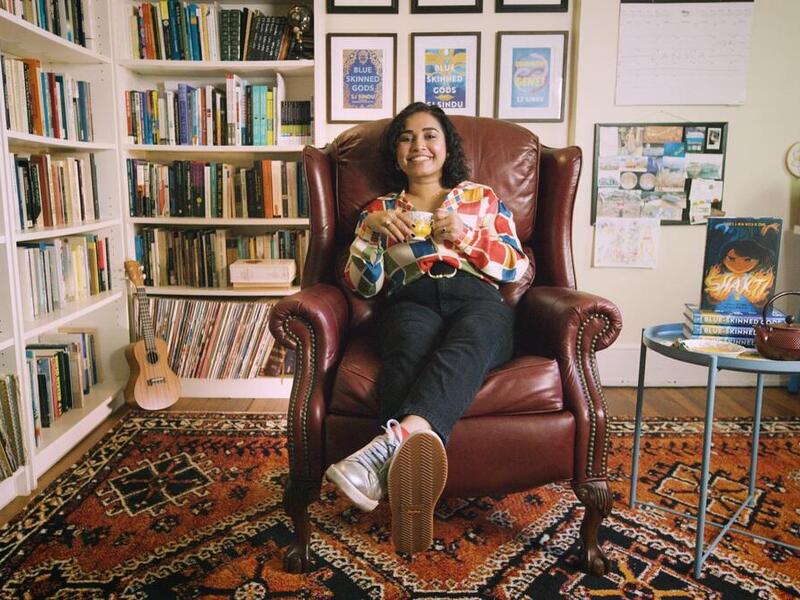
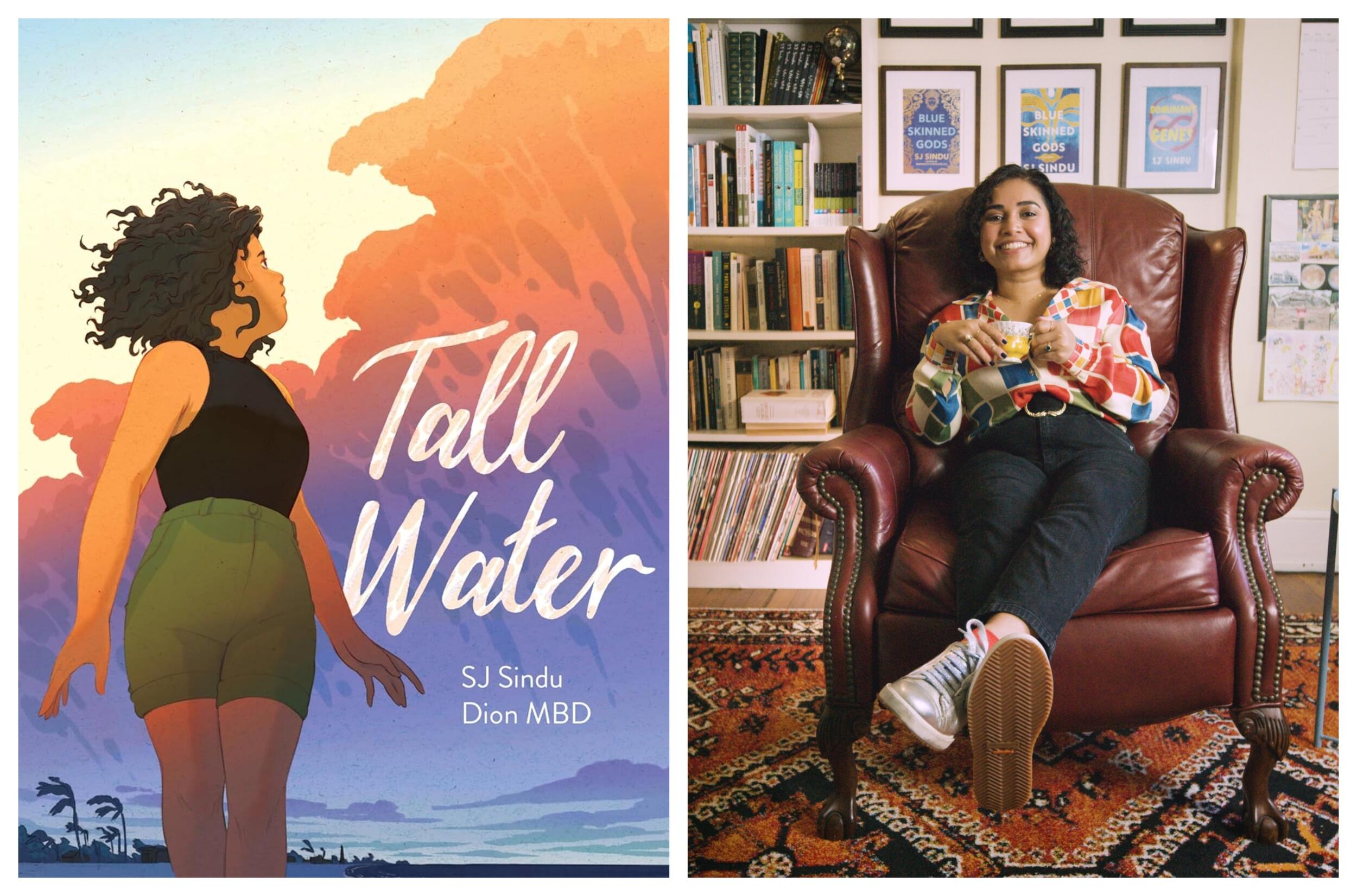
SJ Sindu’s latest book was inspired by the 2004 tsunami that devastated her native Sri Lanka.
While the Virginia Commonwealth University creative writing professor had moved to the United States years earlier, she visited shortly after the natural disaster and was struck by the ravaged coastal regions in the Indian Ocean.
“Thankfully I wasn’t caught in the disaster itself, but I did have family members who were, and I saw the damage that was left behind,” said Sindu, Ph.D., a member of the faculty in the Department of English, part of the College of Humanities and Sciences. “I’ve always wanted to write about that event, but it took me many years to think of the ... story that would best be the vehicle for writing about the tsunami.”
That story became “Tall Water,” which was released at Shelf Life Books in Richmond on Sept. 16. Sindu spoke with VCU News about her inspirations for “Tall Water.”
Give us the setup for “Tall Water” and its interesting main character.
“Tall Water” is about an American teenage girl named Nimmi who dreams of being a journalist like her parents, and is struggling with the usual high school obstacles of getting into college and having a boyfriend for the first time. Nimmi is half-Tamil, but she’s estranged from her mother, who chose not to leave Sri Lanka during the roughly 25-year civil war that began in the 1980s. When Nimmi’s father gets sent back to Sri Lanka to cover the war, she makes plans to join him. Nimmi hopes to reunite with her mother. What our characters don’t know is that a tsunami will strike Sri Lanka during their visit.
What led you to making it a graphic novel?
I considered writing this as a regular YA novel, but I eventually realized that the visual aspect of the story is important enough that it should be rendered onto the page. The story deals with some intense topics — war, loss, death, natural disaster — and at the same time is set on a tropical island with a lot of beauty to offer, so the graphic novel form seemed a good way to both depict the beauty while bringing home the devastation of natural disaster.
What differentiates “Tall Water” from your previous graphic novel?
My other graphic novel is “Shakti,” which is for a middle-school-age audience. “Shakti” is set in the U.S. and deals with identity and bullying, and has a speculative element of fantasy to it. “Tall Water” is for the most part a realistic story aimed at an adult and older teen audience.
What were the biggest challenges in writing “Tall Water”?
I struggled with knowing how much to show on the page. On the one hand, I didn’t want the book to be too much for teens, but on the other hand, I also didn’t want to censor myself, especially when it came to depicting the truth about the horrors of war and natural disaster. I ended up being more unflinching than I first thought I’d be.
What is the meaning behind the title?
Sometimes I don’t have the title until I’m done with the story. But in this case, I had the title, “Tall Water,” before I even had a story. My family told me how horrifying it was to see how tall the waves got during the tsunami, and that image just got stuck in my head.
What do you hope people take away from “Tall Water”?
I wanted to show several things. First, that there is no glory in war, and that those who suffer most are the civilians caught in the middle. Second, the power of natural disasters to utterly destroy lives, a fact we should be more and more aware of as climate change makes natural disasters more likely. The third one is more personal, and that’s the idea of finding purpose in service to others, in activism and in witness. As a writer and artist, I feel the responsibility of bearing witness to the horrors and the joys of the world, and of bringing that knowledge to the world. Nimmi discovers her purpose in a similar way throughout the book.
Subscribe to VCU News
Subscribe to VCU News at newsletter.vcu.edu and receive a selection of stories, videos, photos, news clips and event listings in your inbox.