Nov. 21, 2025
New York Fashion Week had some VCU flair
Share this story
For many college students, four years is a landmark timeframe – a span that stretches from arriving freshman to graduating senior. For a Virginia Commonwealth University professor, four years has been a memorable and surprising journey, too – with graduation recently into the big time of an unexpected field.
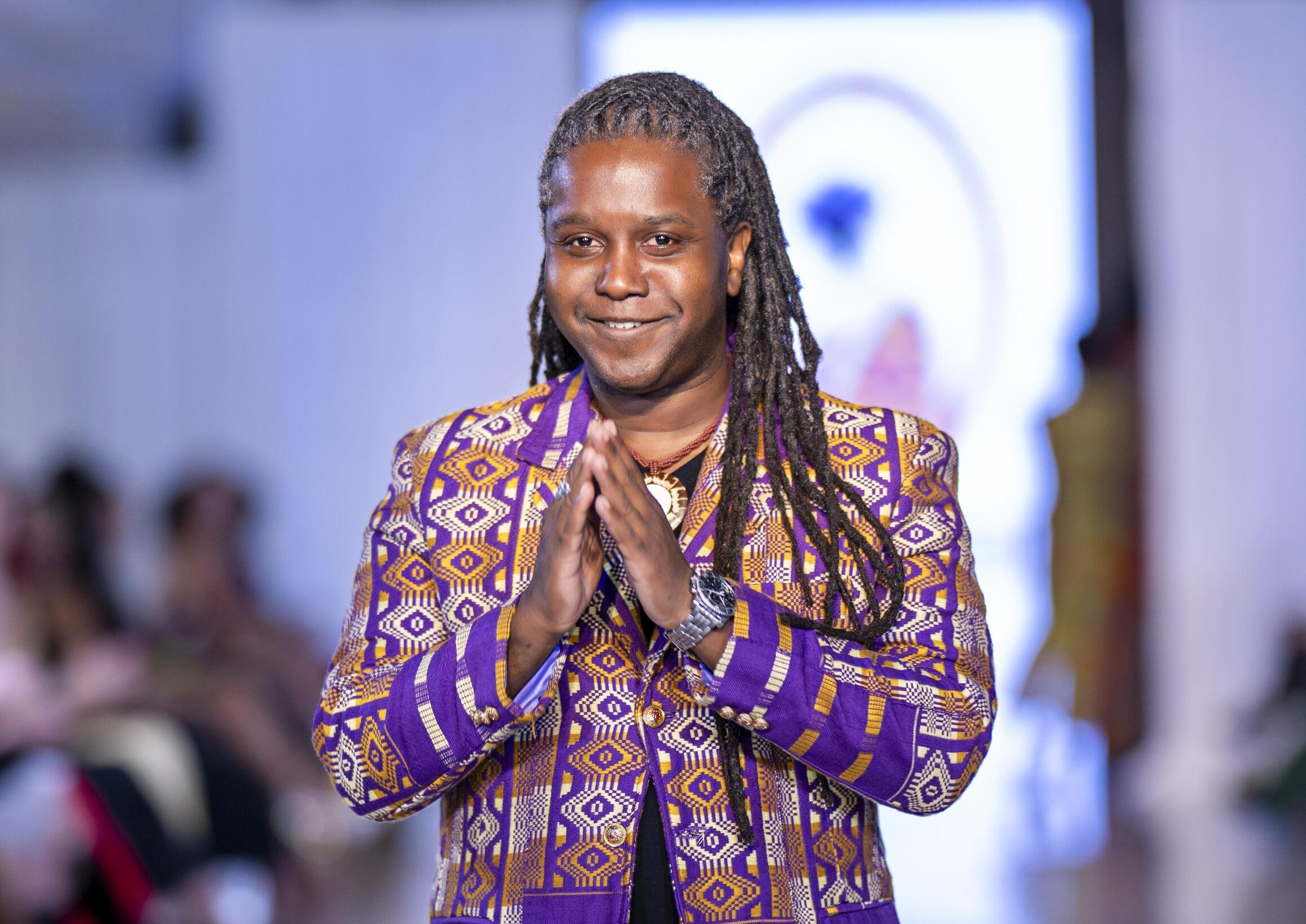
Maurice Gattis, Ph.D., is an associate professor in the School of Social Work, but he has turned heads and eyes with his fashion line. This fall, his Fort Mosé 1738 celebrated its four-year anniversary in high style: Gattis presented his spring/summer 2026 collection at New York Fashion Week in September, a mark-it-on-the-calendar showcase in one of the world’s fashion capitals.
“I don’t know that four years ago, when I started Fort Mosé 1738, I would have thought, ‘Oh, this is going to be at a pretty major show in New York Fashion Week,’” Gattis said. “To be there and have a show, and have it well-received, was kind of nice. It was an honor.”
How the social work professor became a fashion designer is itself a surprising story, but Gattis has found acclaim for a fashion line that blends meaning and material. Fort Mosé 1738 is named for the first legally sanctioned free Black community in the United States, and the clothes are produced in Ghana.

The new spring/summer collection draws inspiration from the novel “Happy Land,” which follows a town of slaves who obtain freedom and create their own kingdom called Happy Land. Gattis was drawn to its fusion of individuals being free in the United States while still being of African descent.
“The collections and the names often draw inspiration from Black firsts or fusions of culture across the diaspora,” he said. “That’s how I name the clothes – that’s how I think about the collections.”
Gattis’ NYFW showcase featured 12 pieces (six masculine and six feminine), with half being made of kente, the hand-woven cloth from Ghana with deep cultural significance and bright, expressive character. A hallmark of Fort Mosé 1738 is the Ghanaian roots of Gattis’ designs and the production process, as the pieces are created in the West African country.
Gattis said the NYFW experience was an ideal opportunity to reflect on the four-year journey so far.
“I think we all kind of do things in our own times and ways,” Gattis said. “My goal has always been a slow and steady progress, look for opportunities, apply for them and see what kind of happens.”
He has plenty of ideas for the next collections – and hopes they continue to find an audience.
“I really want to continue to spread the story of Fort Mosé 1738,” Gattis said. “I think that’s a very important thing, and I achieve that through fashion.”
Subscribe to VCU News
Subscribe to VCU News at newsletter.vcu.edu and receive a selection of stories, videos, photos, news clips and event listings in your inbox.