Feb. 4, 2026
$4.5M in new grants propels VCU researcher’s projects for blind and visually impaired individuals
Share this story
With two new federal grants totaling $4.5 million, Virginia Commonwealth University researcher Dianne Pawluk is continuing to pioneer advances for blind and visually impaired individuals.
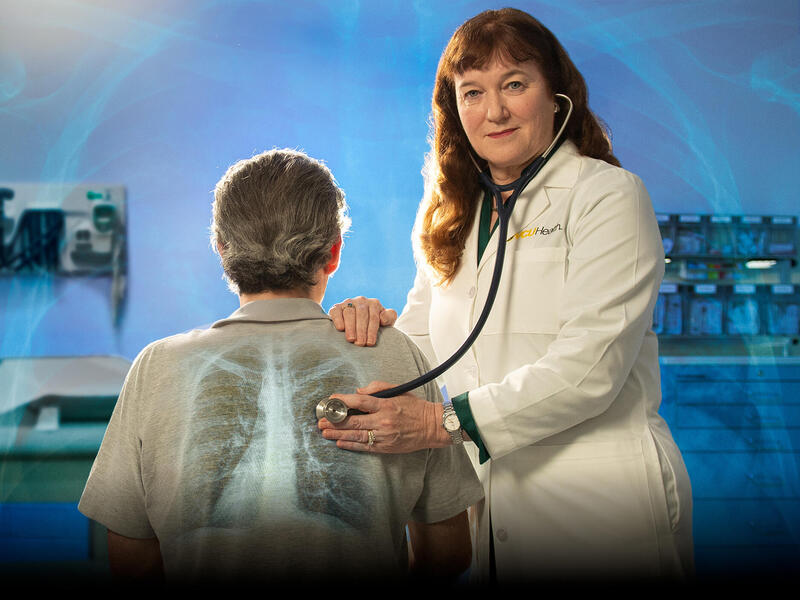
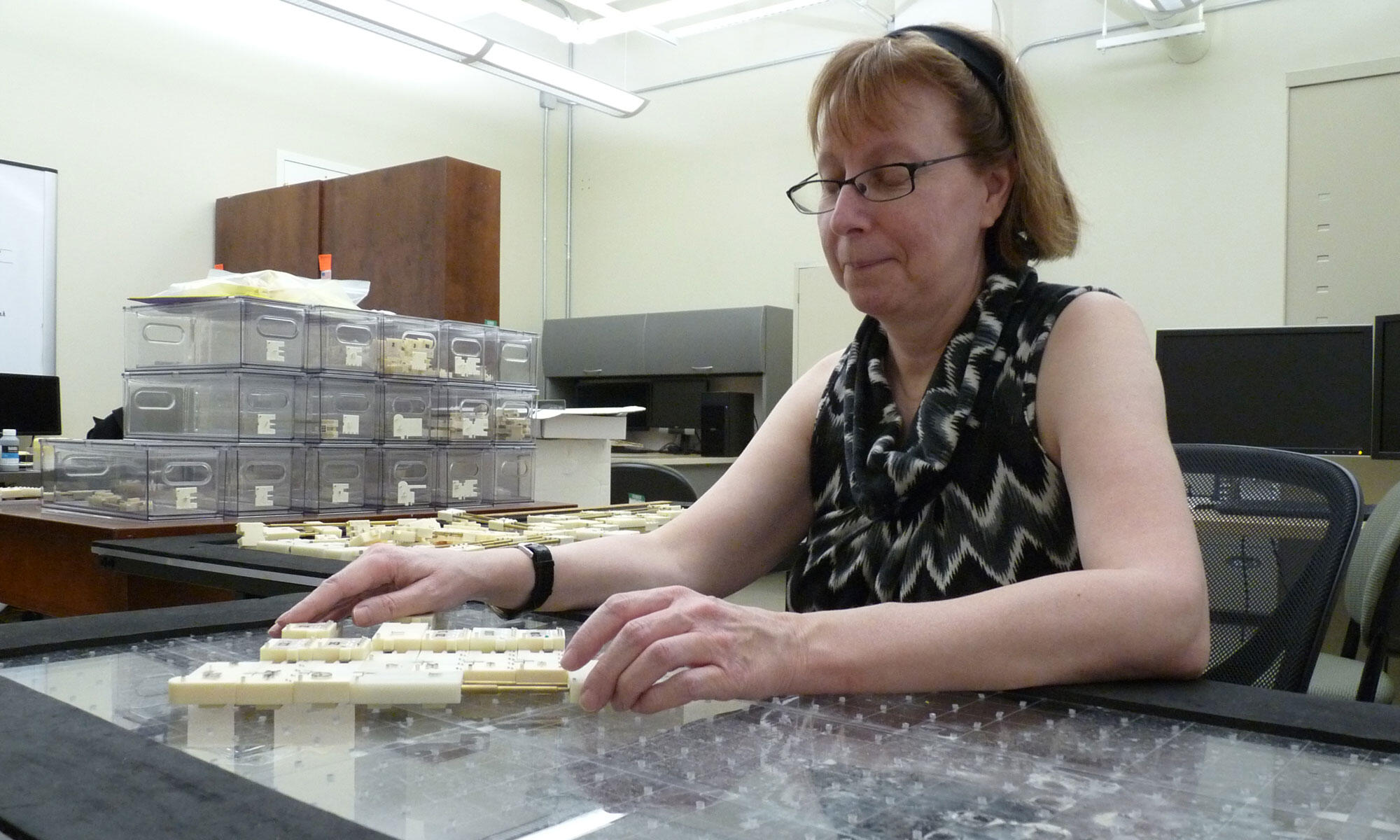
Pawluk, Ph.D., is an associate professor in the College of Engineering’s Department of Biomedical Engineering. She develops devices and algorithms for assistive technology for blind and visually impaired individuals, and her two recent grants – one related to translating visual diagrams, the other to extending computer science education – reflect the range of her efforts.
“Equal access to information is important for individuals who are blind or visually impaired to have autonomy and control over their decision-making processes and other tasks, which will allow them to live productive and fulfilling lives,” Pawluk said. “These projects go beyond creating an equivalent experience. They enable full collaboration between visually impaired and sighted people, ensuring equal opportunity.”
Through the first grant – $3.2 million from the National Institutes of Health’s National Eye Institute – Pawluk is pursuing a five-year project to fund a low-cost system that will automatically convert and render visual diagrams in accessible formats on a multimodal display. This would include a refreshable tactile display and an enhanced visual magnification program. An automated haptic assistant would provide support for blind and visually impaired users to explore a diagram.
Pawluk is collaborating with Tomasz Arodz, Ph.D., associate professor in the Department of Computer Science, on the project.
Through the second grant – $1.3 million from the National Science Foundation – Pawluk is pursuing a four-year project to make computer science education more accessible to blind and visually impaired students, in this case by developing a nonvisual interface for the Scratch programming platform. The haptic-based tangible interface, which involves code blocks and a small robot that interprets them, will allow students to learn programming alongside their sighted peers in classrooms, camps and clubs. High-contrast visual information will also be provided for those with low vision.
The project is a collaboration with the Science Museum of Virginia, Arizona Science Center and Liberty Science Center.
A version of this story was originally published on the College of Engineering website.
Subscribe to VCU News
Subscribe to VCU News at newsletter.vcu.edu and receive a selection of stories, videos, photos, news clips and event listings in your inbox.