April 16, 2026
Researcher’s invention could make Hollywood-grade 3D scanning more accessible for movies, video games and more
Share this story
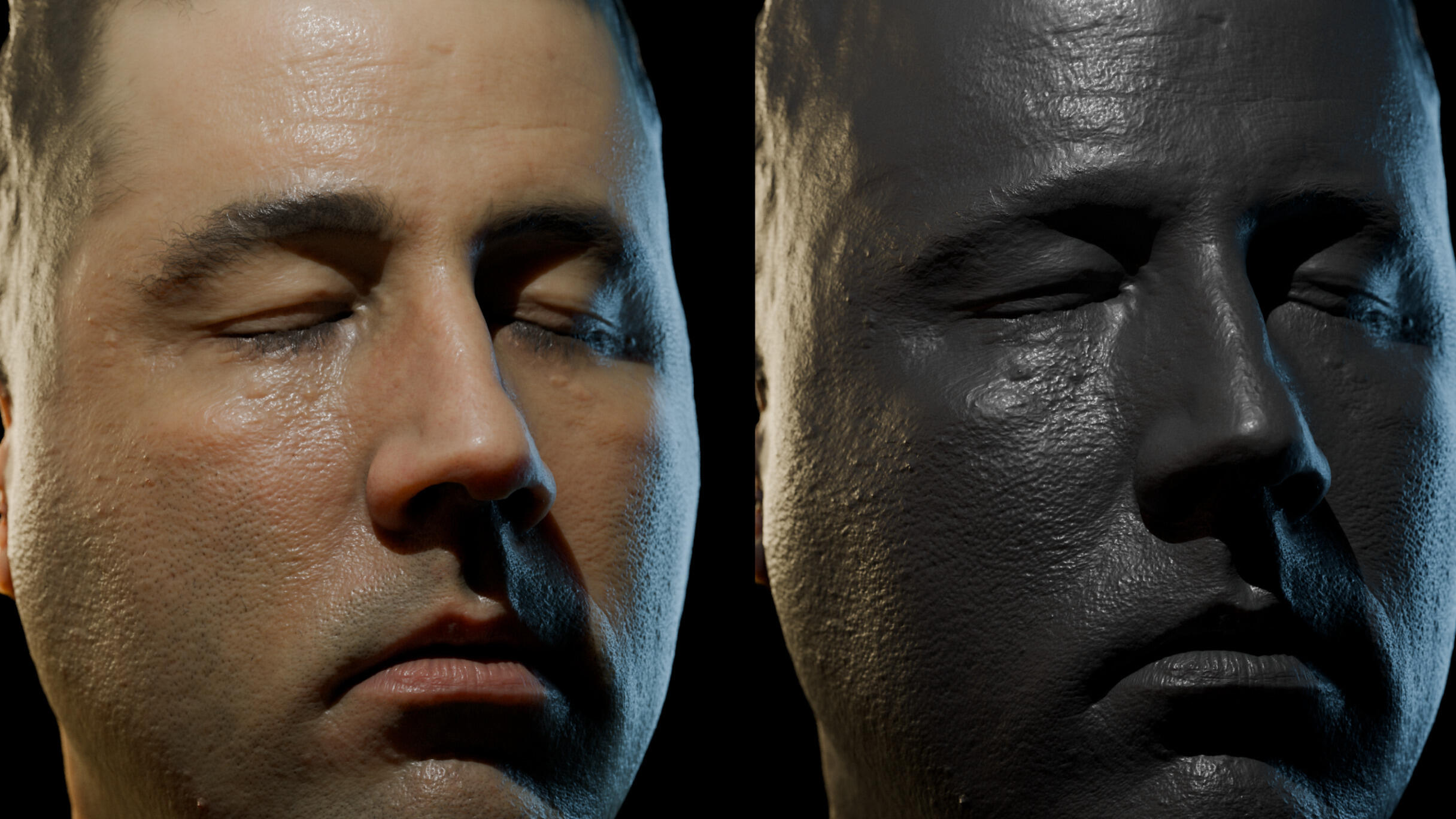
For Hollywood movie makers and “AAA” video-game designers to capture the tiny details that make an animated human look real — skin texture, pores, wrinkles and subtle surface contours — it requires a massive, expensive setup of lights and advanced optics.
Ernesto Rodriguez Cruz has found a better way.
The assistant professor of communication arts at the Virginia Commonwealth University School of the Arts has developed what he calls the “Box Stage,” a far more compact, lower-cost system designed to capture highly detailed 3D surface information without the heavy, complex setups long associated with traditional “light stage” technology.
Cruz said the project grew out of personal frustration. As he produced a short animated film and tried to scan a face convincingly, he found that existing technology was difficult, expensive and inaccessible.
“I built Box Stage because I needed studio-grade facial detail for my film but didn’t have access to studio rigs,” said Cruz, whose career includes years working on top-tier “AAA” video games. “With our technology, it is possible to achieve quality comparable to that of Academy Award-winning light stage systems, but at significantly lower cost and with far simpler hardware.”
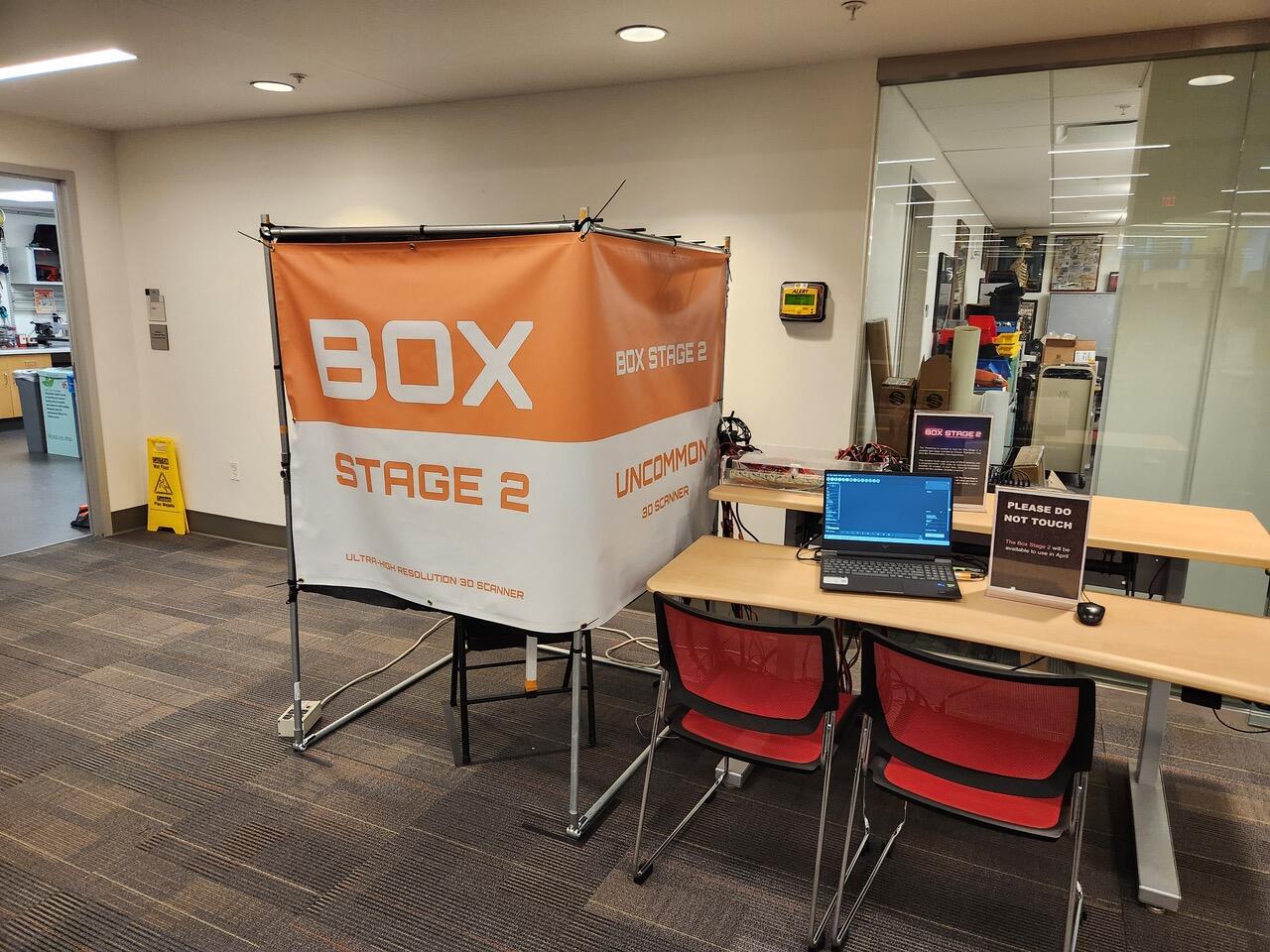
Cruz’s device is available for use for a limited time at VCU’s James Branch Cabell Library, where resident artists, researchers and students can begin exploring its applications. An Open House and demonstration of the Box Stage is scheduled for April 23, 1-3 p.m. in The Workshop on Cabell’s lower level.
Simple approach to a complex problem
Hollywood-level light stage systems — considered the gold standard for capturing ultra-realistic digital humans for blockbuster movies and video games — are wildly expensive and rely on hundreds of lights, multiple camera arrays and specialized optics requiring precise, time-consuming calibration. Specifically: polarizers, which act as filters that control how light waves pass through a lens. Think of the way polarized sunglasses reduce glare and offer greater clarity (and come with a higher price tag), Cruz said.
Because light scatters beneath the surface of human skin, fine details like pores and subtle wrinkles appear blurry in a normal image. Those details become more visible in the shiny highlights that form when light reflects off the skin.
To capture that detail, light stage systems use polarizers to take two separate images. One image removes the shiny highlights, showing only the skin’s natural color. The other captures both the color and the highlights. By comparing the two — essentially subtracting one from the other — researchers can isolate the highlights, which contain the fine surface detail.
Cruz’s technology removes the need for costly polarizers and complex rigging.
Instead, Box Stage uses an array of digital cameras to capture the same underlying information with standard white light, physical properties in the highlights and computational processing, dramatically simplifying both the hardware and workflow. The result: a portable system, at a fraction of the cost, that still produces the high-quality surface detail needed for realistic 3D capture.
The device took Cruz, an electrical engineer and 3D artist, three years to develop.
From a cube to a broader impact
His invention disclosure, submitted in December to the VCU TechTransfer and Ventures, describes the Box Stage technology as a “precise, portable, low-cost photometric capture system” that can recover both diffuse and specular surface normals, key ingredients for building realistic 3D models.
The current version of Box Stage — a 3-by-3-by-3-foot fabric cube lined with LED light strips and equipped with 11 cameras — can capture a full facial scan in under one second and process it in a few minutes.
Just as important, it is portable — which could open doors well beyond film and video games.
Cruz said the technology isn’t limited to faces or film, and the Box Stage is scalable to smaller sizes, with potential applications ranging from forensics and manufacturing to wound tracking, aerospace and microscopic imaging, where capturing fine surface detail is critical.
“With Ernesto’s technology, you’re looking at a significant shift in accessibility,” said Brent Fagg, assistant director for innovation at VCU TechTransfer and Ventures. “By reducing cost and complexity, this technology has strong potential for adoption across multiple industries. It’s also super cool.”
And at VCU, Cruz wants it to be a hands-on tool for others, too.
The Box Stage has been installed temporarily at The Workshop in Cabell Library for the VCU community to explore.
“We’re taking something that was only possible in major studios and making it accessible to anyone,” Cruz said. “With our technology, you can 3D scan the same level of detail as the Academy Award-winning light stage, but with a foldable box stage that you can carry in a travel bag."
Subscribe to VCU News
Subscribe to VCU News at newsletter.vcu.edu and receive a selection of stories, videos, photos, news clips and event listings in your inbox.