May 21, 2026
Class of 2026: Stephen Tivenan brings AI to climate forecasting
Share this story
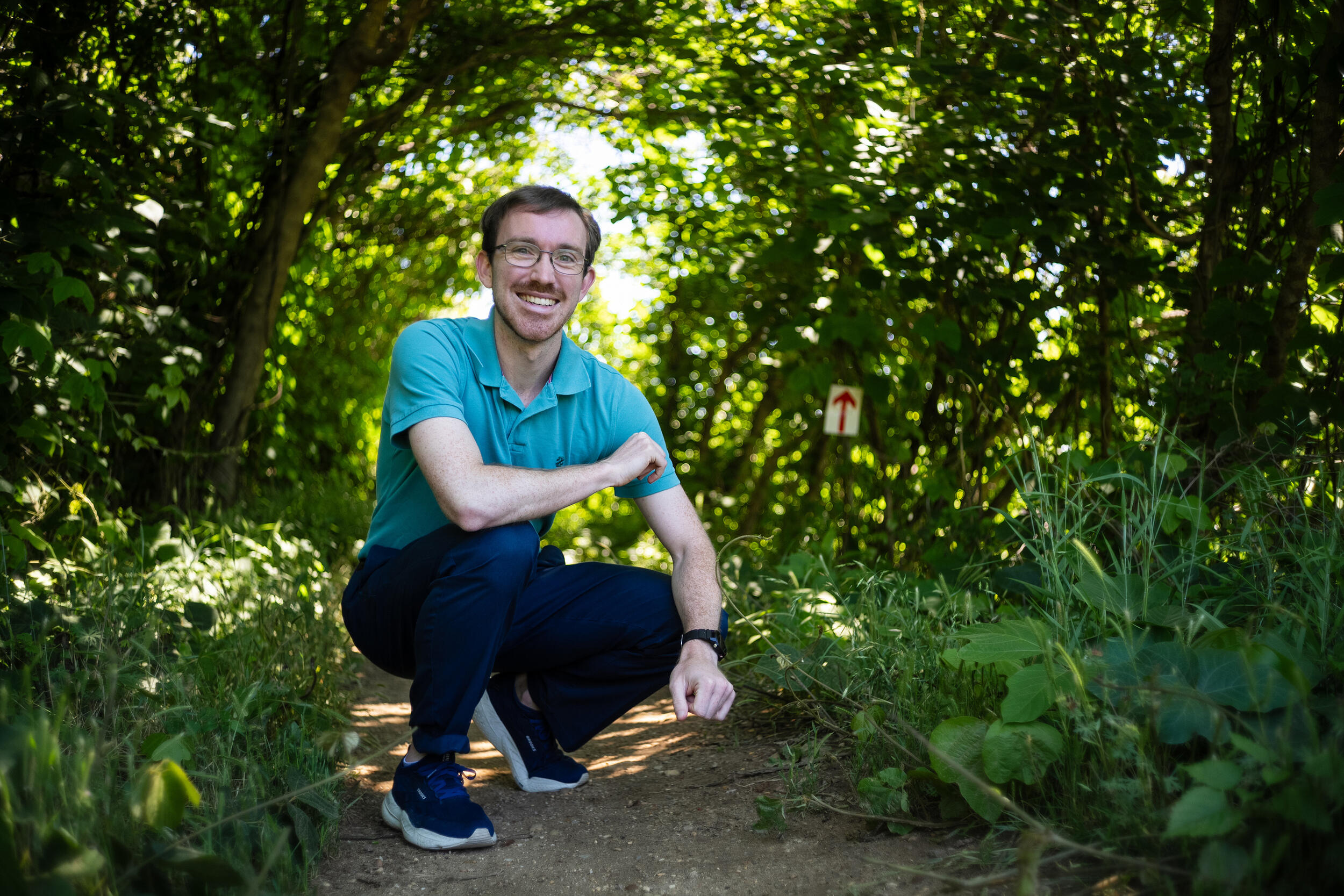
For Stephen Tivenan, assessing the planet’s outlook – and building public trust – can come down to the margin of error.
“It’s one thing to make these big statements about the future,” said Tivenan, who uses machine learning to investigate climate classifications. “But without a sense of the actual uncertainty behind those predictions, it can lead to massive misunderstandings. I want to know the reason and the confidence behind these claims, findings and results using a data-driven approach.”
Graduating this spring, Tivenan earned his Ph.D. in systems modeling and analysis from Virginia Commonwealth University’s Department of Statistical Sciences and Operations Research, part of the College of Humanities and Sciences. His work has focused on arid and semi-arid climates across Africa, identifying patterns in massive sets of seasonal data and exploring the risks of desertification.
A graduate of Mills Godwin Highschool in Henrico County and a physics and math double major at the University of Mary Washington, Tivenan initially intended to pursue a doctorate in physics. However, he felt pulled toward environmental advocacy and applied to VCU’s program in 2020.
“I wanted to find my passion, which was the environment, and thought VCU provided a great opportunity for that,” he said. “I looked at the research being done here with ecological systems, math and biology, and there was just a natural connection.”
This year, Tivenan was selected as an honorable mention in the student paper competition of the ASA ENVR – the American Statistical Association’s Section on Statistics and the Environment. His work focused on developing frameworks that identify large-scale environmental changes, and how machine learning models can reveal patterns that may otherwise be missed.
“AI is specifically good for monitoring patterns,” he said. “In the environment, things are very seasonal. If it rains or stays hot consistently, these models can catch those long-term trends.”
Tivenan’s work has drawn attention. This summer, he will travel to Boston for the ASA’s Joint Statistical Meetings and present his work – an honor that highlights the relevance of his research, though he remains humble about the recognition.
“I didn’t really think much of it until my advisor told me it was a big deal,” he laughed. “I’m just looking forward to talking about my work and collaborating with different people.”
As for our future climate, Tivenan said he’s a natural optimist, noting the private sector’s move toward net-zero emissions and progress in international climate talks. He thinks his work can advance the cause.
“I understand why people may not trust science when predictions aren’t as accurate as expected,” Tivenan said. “But by quantifying the uncertainties, we can move away from misunderstandings and toward more effective frameworks for change.”
He now looks forward to a career that balances high-level analysis with community impact, starting with applying for postdoc positions and statistician roles. "My career goal is to always be in a position to make meaningful contributions and to help people understand the world around them.”
Subscribe to VCU News
Subscribe to VCU News at newsletter.vcu.edu and receive a selection of stories, videos, photos, news clips and event listings in your inbox.