April 6, 2026
With her latest project, VCUarts professor creates an accessible indoor ocean
Share this story
“Meditation Ocean,” a project conceived and directed by a Virginia Commonwealth University professor, submerges visitors in an immersive experience so that they can consider life underwater from a fresh perspective.
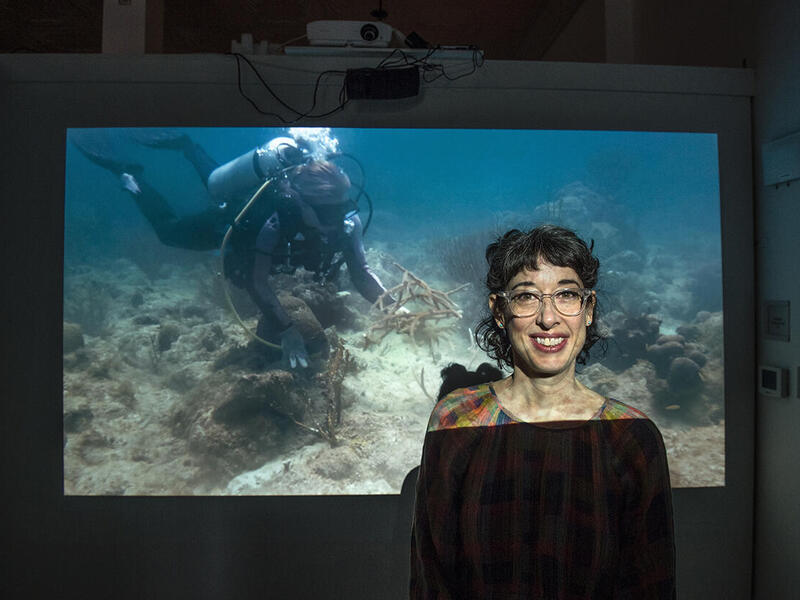
“Meditation Ocean” debuted at the Wexner Center for the Arts in Columbus, Ohio, before running at the Birch Aquarium at the Scripps Institution of Oceanography in La Jolla, California, from November 2025 to February 2026. Hope Ginsburg, professor of kinetic imaging in the VCU School of the Arts, has led the development of the ongoing project with an expansive ecosystem of collaborators.
“Meditation Ocean” used a six-screen installation at the Wexner to submerge viewers in the marine habitats of Biscayne National Park. The work created a physical link between the landlocked Midwest and the Florida Keys, inviting audiences to “breathe” with underwater species through a synchronized video and soundscape.
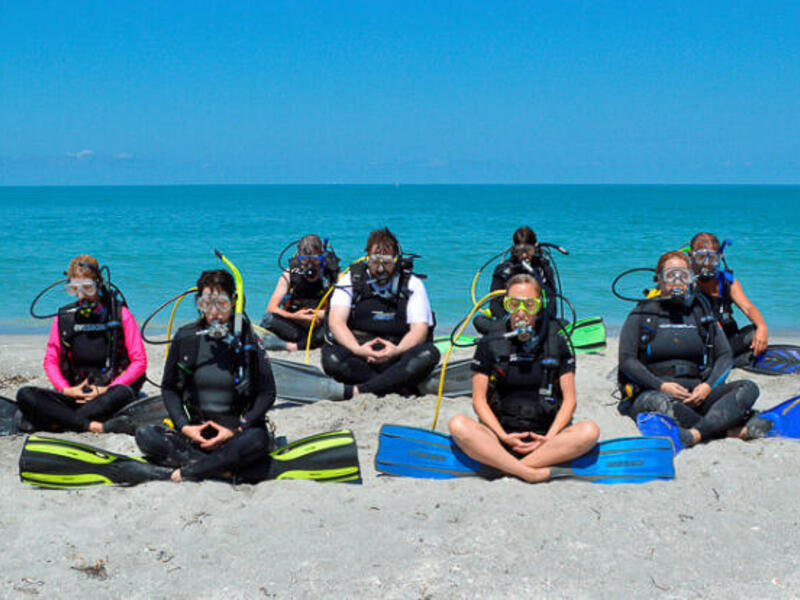
“The notion was to create an indoor ocean in which people could really participate and meditate individually, as a group and with the other species,” Ginsburg said.
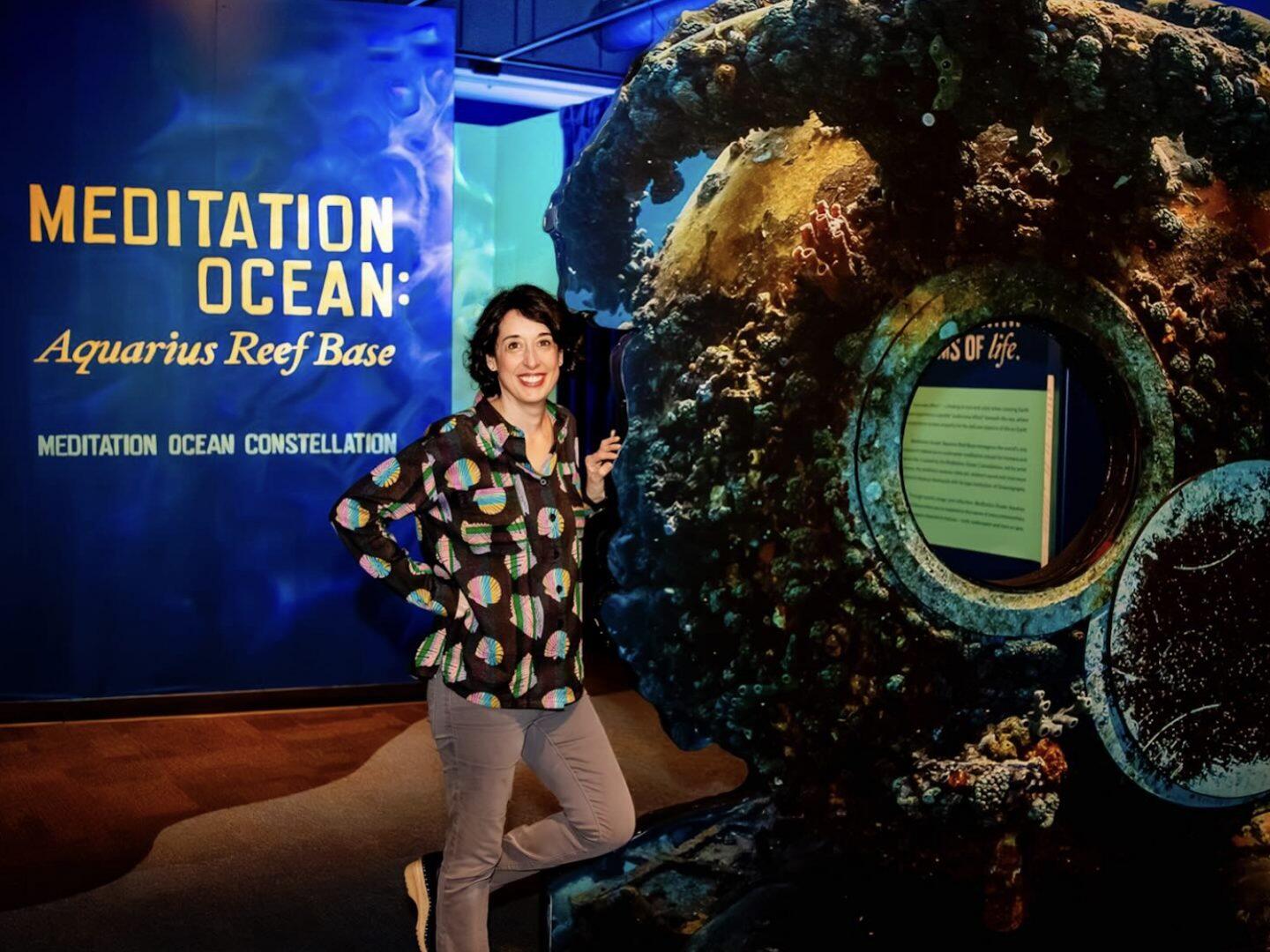
The next iteration of the ongoing body of work at Birch Aquarium was titled “Meditation Ocean: Aquarius Reef Base.” This new video installation reimagined Florida International University’s Aquarius Reef Base, the world’s only undersea research habitat, as a space for contemplative practice. The exhibition at Birch was contextualized within the scientific legacy of the Scripps Institution of Oceanography, which dates to 1903. Visitors entered immersive projections filmed at the original underwater platform, surrounded by interpretive exhibits including a recreation of the aquanauts’ living quarters at the reef base.
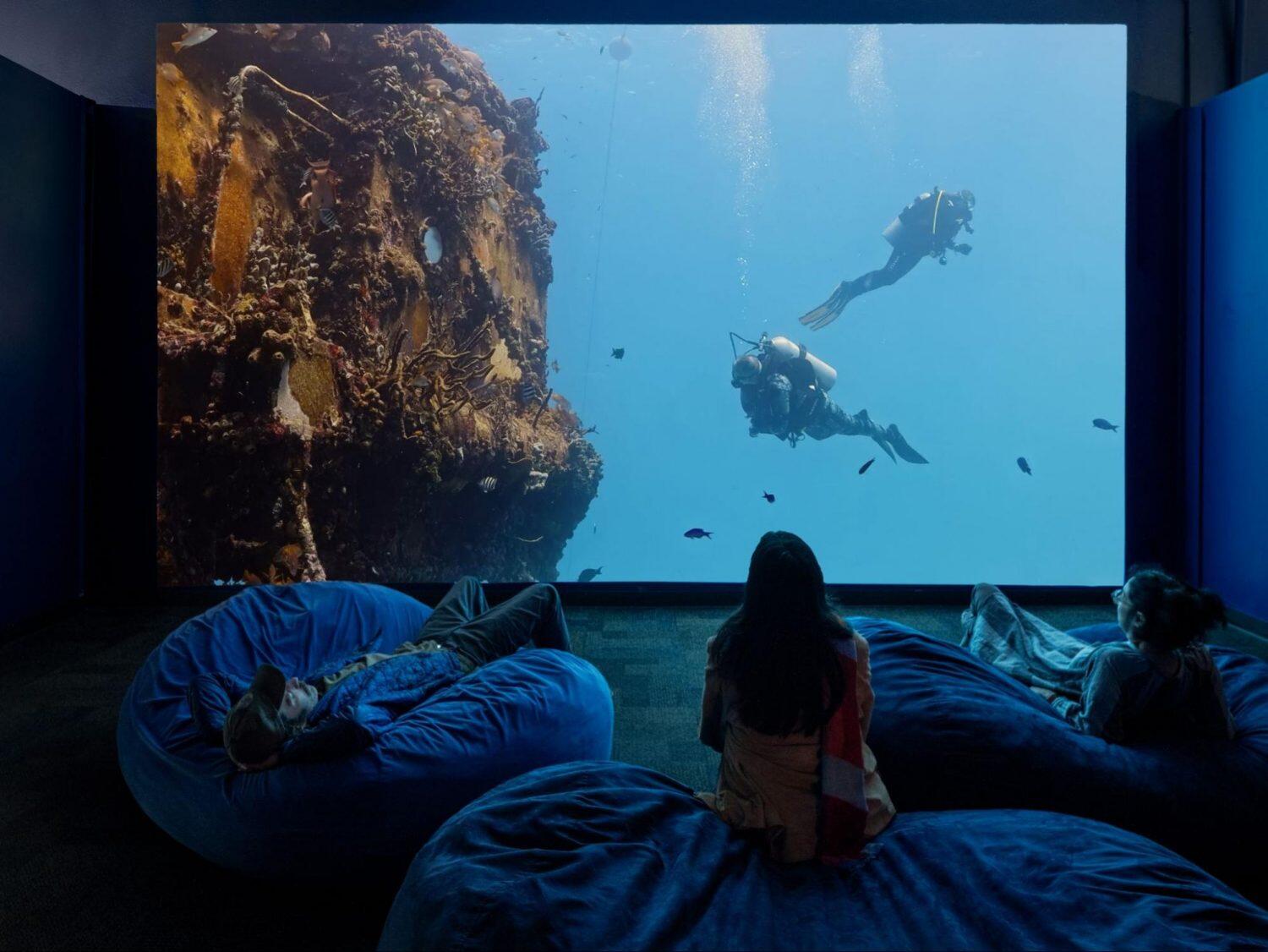
A group called the Meditation Ocean Constellation, which includes artists, musicians, curators, filmmakers, editors, writers, divers, meditators and scientists, among others, is ultimately responsible for the project, Ginsburg said.
“It's a collaborative, porous team of contributors, many of whom I've worked with in the past,” she said. “And it's come together very organically through relationships, through dialogue, and through people's incredible talents and skills. And so this piece is really the result of an ecology of contributors and takes the focus off of any one individual.”
Ginsburg and the Meditation Ocean Constellation use the installation to highlight the psychological state of saturation divers, pointing to recent research that draws a parallel to the “overview effect” — the profound shift in perspective reported by astronauts when viewing the Earth as a borderless entity from space.
“Meditation Ocean” serves as an accessible indoor ocean for visitors and a platform for public programming. Ginsburg has followed this exploration of social practice, art that engages communities across diverse fields, since the start of her Sponge projects in 2006, which used the sea sponge as a model for “porous” learning and interdisciplinary exchange.
By translating the lessons of the sponge into this current oceanic meditation, Ginsburg reframes the sea as a living space that supports human and other-than-human life, not just a resource for extraction. But the project ultimately asks how the practice of paying attention with other species might strengthen communal resilience as the climate changes.
“I hope that viewer participants who experience ‘Meditation Ocean’ start with an experience of embodiment, that this environment shifts their own relationship to the felt sense of their bodies, and I hope that what begins with an individual, embodied experience expands to a collective sense of well-being,” Ginsburg said. “I hope that sitting with the divers on the seabed evokes a sense of collectivity, and I hope that jumps species. I hope that a sense of well-being between human and more-than-human species is conjured by the piece. And then I also hope there's some connection made between the social and the environmental through the experience of the work.”
A version of this story was originally published – with additional photographs – on the School of the Arts website.
Subscribe to VCU News
Subscribe to VCU News at newsletter.vcu.edu and receive a selection of stories, videos, photos, news clips and event listings in your inbox.