Sept. 1, 2026
Talking across the divide
Share this story
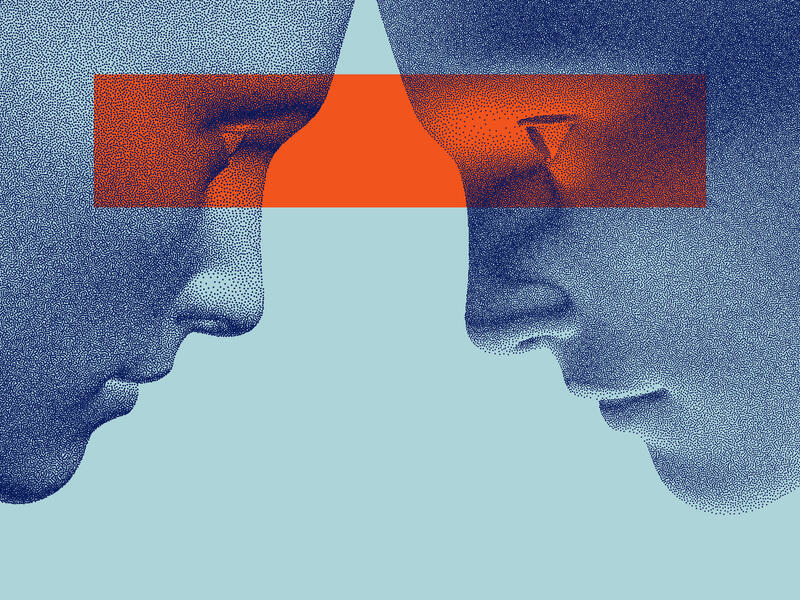
When did it become hard to have a conversation? For many Americans, the idea of speaking with someone with opposing viewpoints has become fraught. Gone are the days when folks could share a joke with their neighbor, regardless of the political sign on their front lawn. According to a November 2018 Pew Research Center report, Americans are more likely to describe conversations across the political divide as “stressful” and “frustrating,” and those that do engage find that they have “less in common” than previously thought. Is this a problem? And if so, what to do about it?
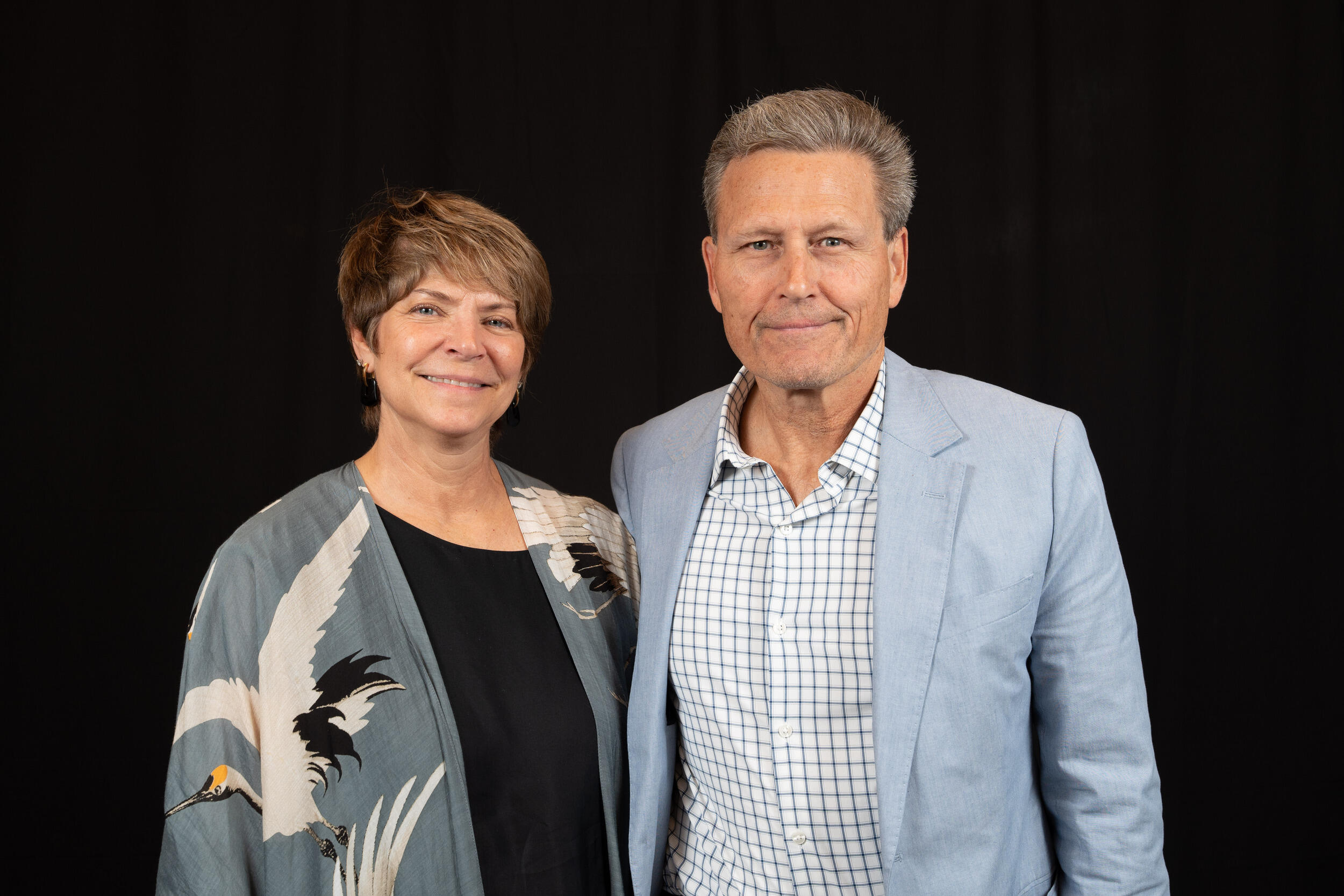
Bestselling author David Baldacci and his wife, Michelle, have given this issue a lot of thought.
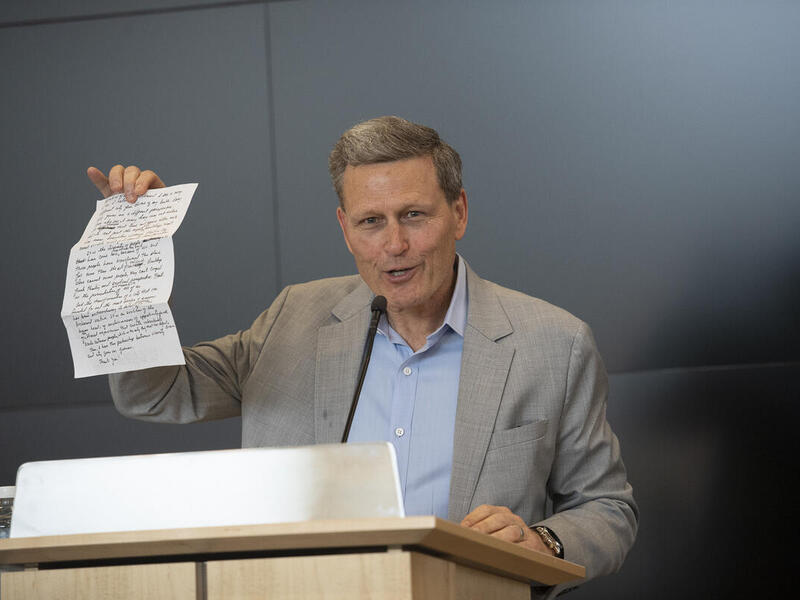
“I have long felt that we need to draw people together in a civil manner and learn to have frank and respectful dialogue with those with whom we have differences,” said David Baldacci, a Virginia Commonwealth University alum.
To aid in that effort, the Baldaccis committed a joint $13 million gift to VCU and the Library of Virginia to fund a groundbreaking nonpartisan initiative focused on civil discourse. Launching in September of 2026, the new Baldacci Institute seeks to strengthen democratic values, nurture civic collaboration, promote a civil exchange of ideas and empower citizens throughout VCU, Richmond and beyond.
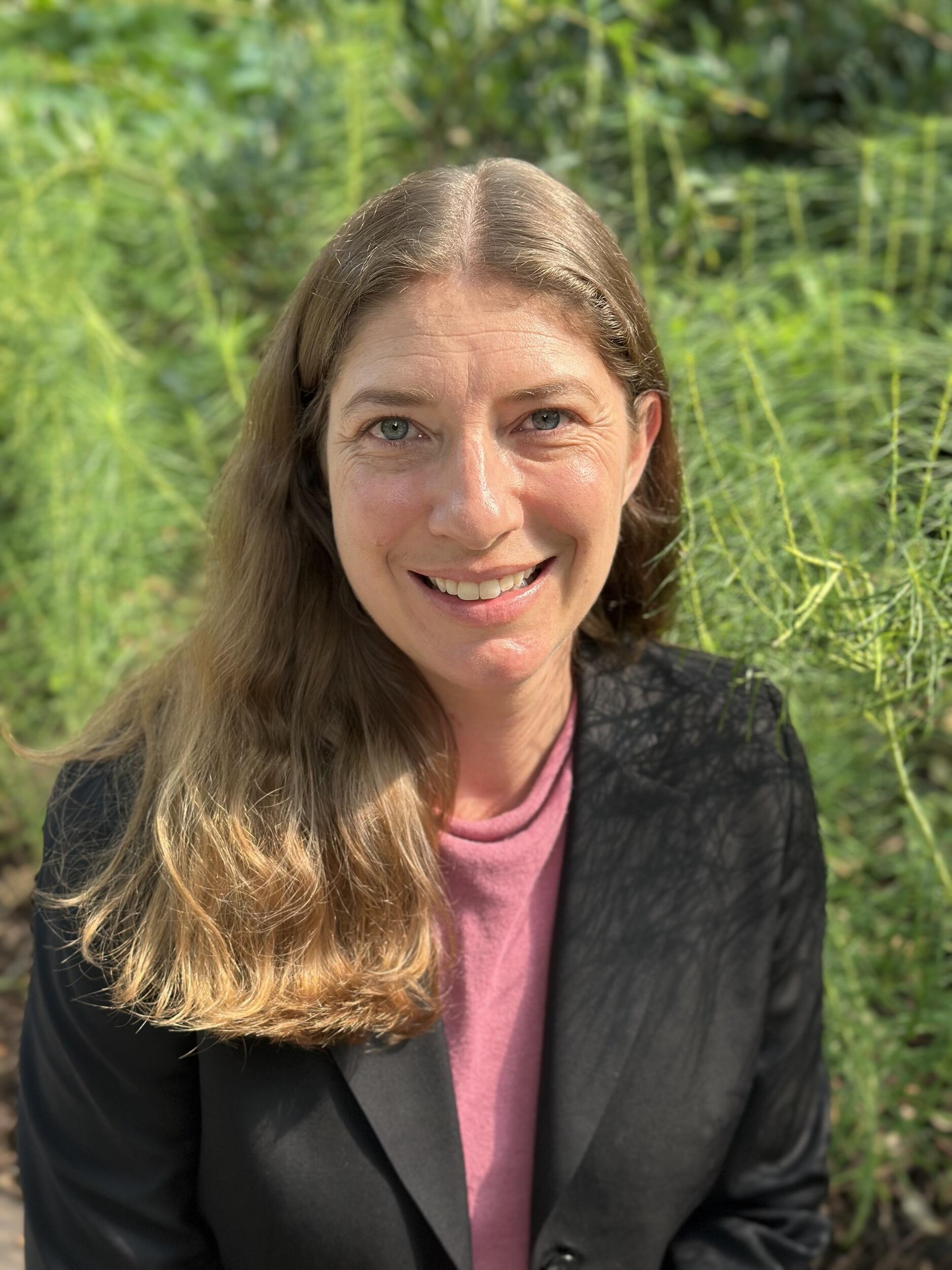
Amanda Wintersieck, Ph.D., an associate professor in the Department of Political Science in the College of Humanities and Sciences, has been named the institute’s inaugural director.
“Civic discourse is essential to building reciprocity, trust and tolerance because it is the process of engaging with people who see the world differently than we do,” she said. “We are living in a moment of intense polarization, where disagreement can quickly become distrust, disengagement and a willingness to engage in negative reciprocity. That is dangerous for democratic life.”
The new Baldacci Institute for Civil Discourse will offer experiential learning opportunities, curriculum development, forums and events, and places to connect. Part of this initiative has already been in the works for several years through the former Institute for Democratic Empowerment and Pluralism, an earlier iteration of the Baldacci Institute. Two signature programs – the Virginia Government Simulation and the Democracy in Dialogue series – will continue to thrive within the new institute.
Talking when it’s tough
Ask most people about their close friendships, and you will find that we tend to socialize with those who share the same beliefs and political leanings, even more so after the 2016 election. There is a substantial amount of research that shows that people also tend to curate information and friendships that support their mindset, creating an echo chamber of sorts where shared values and beliefs are reiterated rather than challenged. Democracy in Dialogue hopes to disrupt that.
Democracy in Dialogue is a public conversation series designed to create space for thoughtful discussion across differences. The series brings students, staff, faculty and community members together to engage with important public issues in a structured, respectful and intellectually serious way. Some events take the form of public square debates, while others are lectures, panels or facilitated conversations.
“Civil discourse means creating spaces where people can debate serious questions with honesty, curiosity, respect, a willingness to listen — and to change our minds — and a willingness to recognize that we may not always be right.”
Amanda Wintersieck, Ph.D.
Wintersieck said the goal is not necessarily to reach consensus, but to seek truth together.
“The beauty of Democracy in Dialogue is that it reveals the deep complexity of issues, uncovers the nuance of hard questions and unveils the lived experiences of participants that help us to better understand how and why people believe the things they do,” Wintersieck said.
In 2025-26, Wintersieck held three Democracy in Dialogue sessions, all were with a Braver-Angels style debate method with light parliamentary procedure. These events were open to all in the community, and each debate was centered around a specific topic — affordable housing, immigration and social media. During the debate everyone was invited to speak on the matter in an orderly manner.
VCU student Liz Zepeda-Cantarero attended the first Democracy in Dialogue session on affordable housing. She had tagged along with a friend and found herself unexpectedly moved by the discussion.
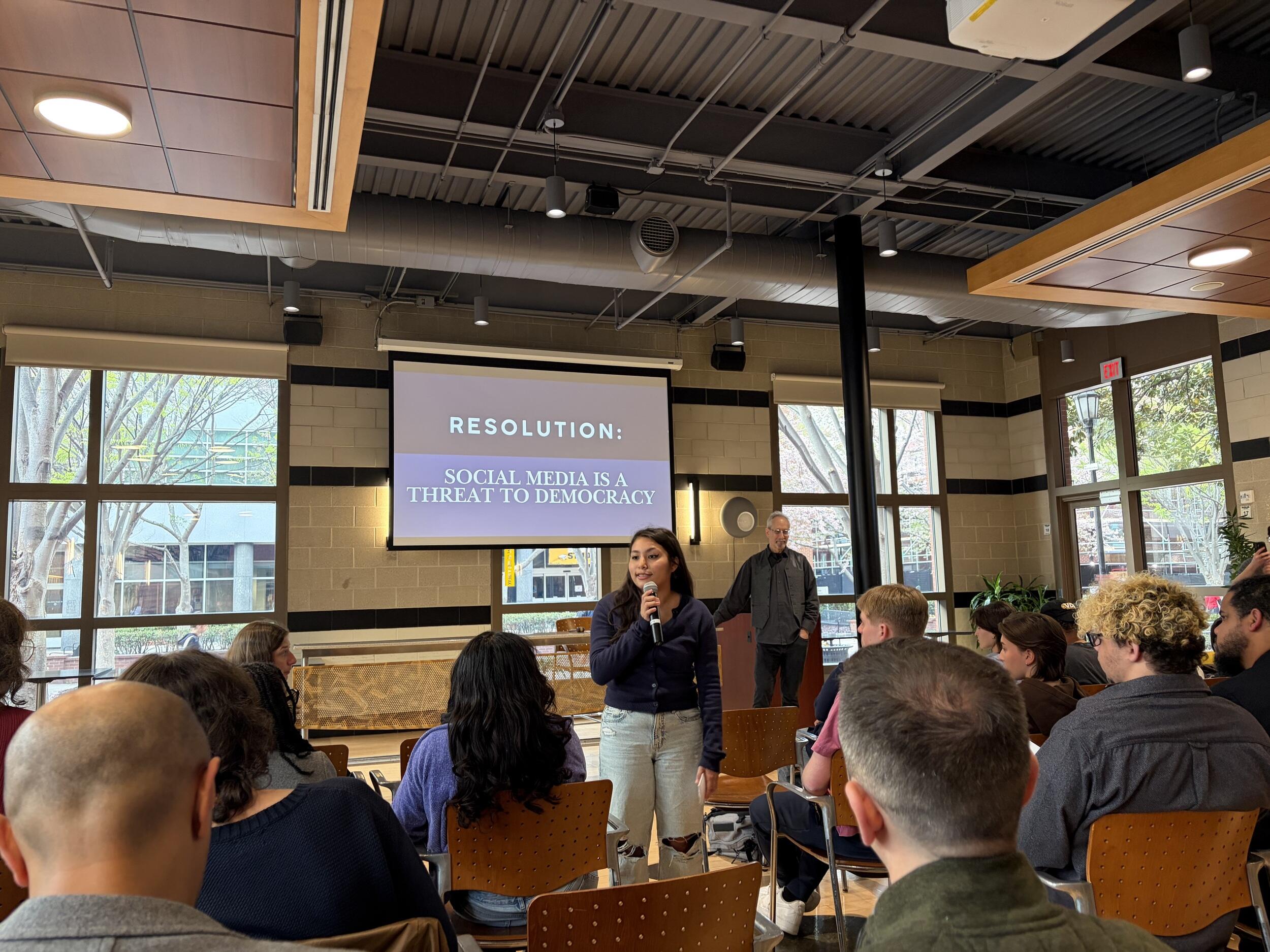
“You may have a differing opinion compared to the person sitting next to you, but your questions and responses are never meant to challenge the individual themselves; rather, they challenge the idea and the thought,” Zepeda-Cantarero said. “I think that's what makes this series so important. In a time where you may feel afraid to voice your opinion, it feels liberating to have the space where you can voice your thoughts without fear of being shamed.”
Inspired by the evening, Zepeda-Cantarero organized the third Democracy in Dialogue session about immigration. Attendees debated whether legal pathway priorities should be given to recently arrived refugees – from there, conversation expanded.
“I wanted people to leave the event with more knowledge, empathy and understanding,” Zepeda-Cantarero said. “I personally know the heavy feeling of having so many opinions but no space to voice them. I hope everyone who felt similarly left the room with a weight lifted off their shoulders.”
From the town square to the state’s capitol
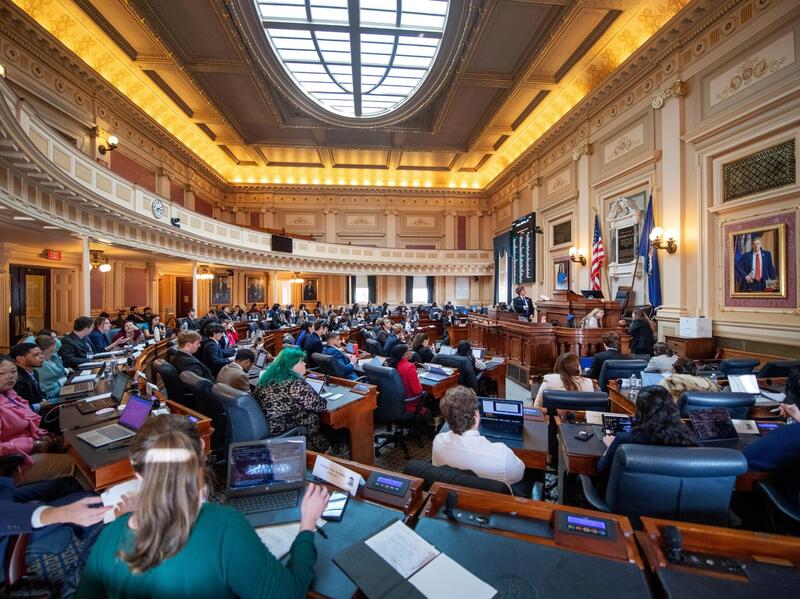
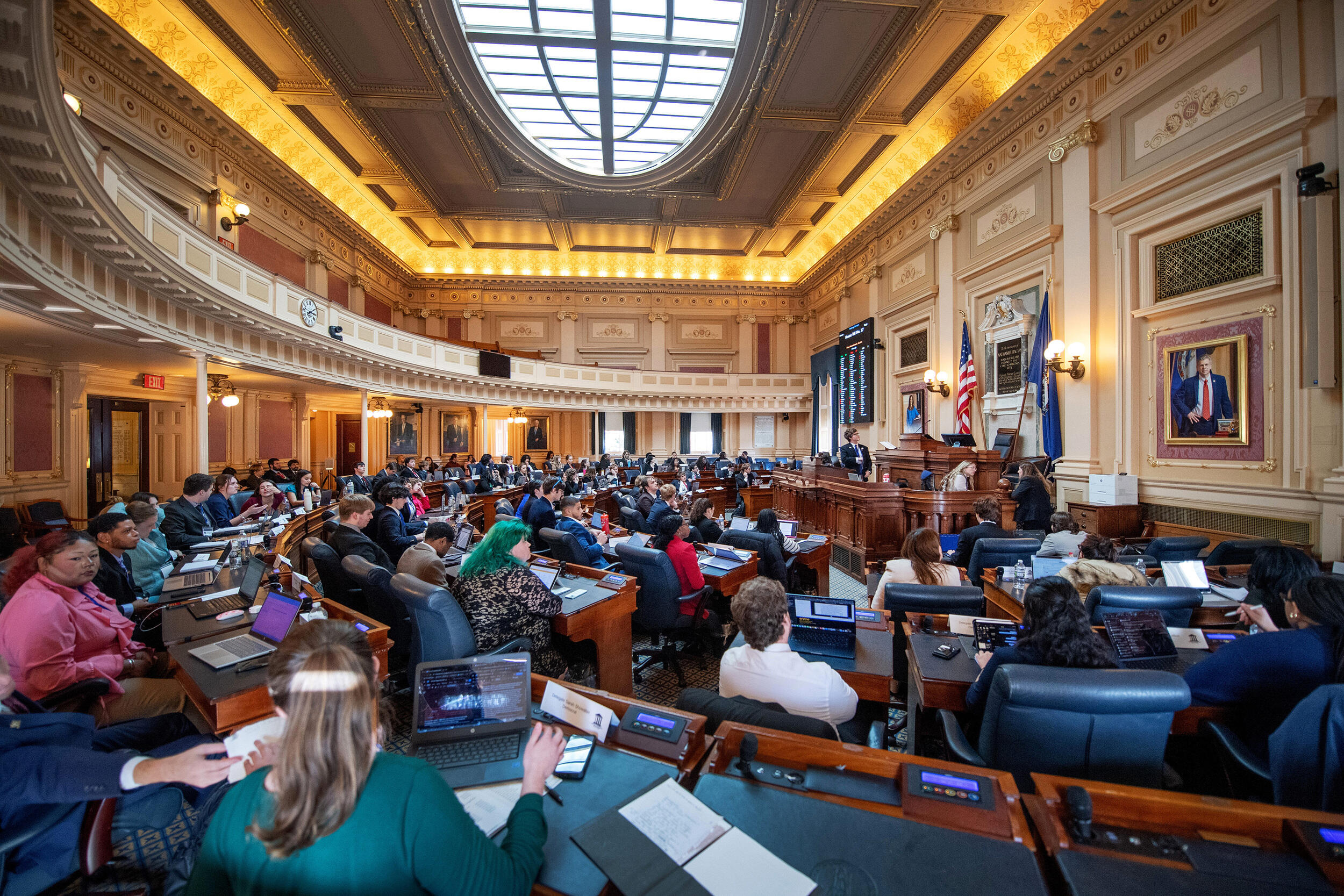
The same skills practiced in community debate translate directly to the machinery of state lawmaking. In November, nearly 100 college students from across the commonwealth gathered in the state Capitol’s House of Delegates chamber. They weren’t there for a tour, rather they were playing the part of lawmakers during the 2025 Virginia Government Simulation. The three-day simulation puts students in the role of state legislators as they research positions, elect party leadership, propose laws and debate legislation.
Wintersieck debuted VGS in 2024, inspired by similar governmental immersive experiences in Tennessee and Illinois.
“VGS is an opportunity to bring students together to teach them about the legislative process, fill that knowledge gap, but also to bring students from all over Virginia together to begin to network and communicate – and to think more about the things that bring them together rather than things that divide them,” Wintersieck said. “By working through disagreement in a structured and shared environment, students build reciprocity, trust, tolerance and a stronger understanding of democratic life. The goal is not just for students to learn about government, but to practice the habits and relationships that make self-government possible.”
Students who participated in VGS were hooked. Ali Thomas, a Brightpoint Community College student who will transfer to VCU next year, partook in VGS for the first time this past year.
“The experience, as a whole, reinforces what is taught in lectures and textbooks, and allows for students to participate in a simulation where we are given the space to learn and grow,” Thomas said.
Especially moving for Thomas was an exchange that happened on the House floor while she was advocating for criminal drug reform. Thomas, a former opioid addict, recounted her experience with drug addiction and incarceration with her peers, and though she was scared of the outcome, she found they were extremely supportive.
“I think by sharing my story and personal experience, I definitely shifted any stigma there was toward addiction prior to introducing my bill onto the floor,” said Thomas, who plans to run for VGS governor during the 2026 session. “Furthermore, I believe this speaks volumes for civil discourse, as a whole. While we may not always see eye-to-eye across the aisle, a meaningful and respectful debate provided me with the space to share my story and influence the naysayers of recovery efforts so much so that my bill for criminal drug reform was passed unanimously.”
VGS also reminded participants how important each individual voice is to a democracy.
“For me, VGS has restored my faith in the legislative process,” said VCU student Jackson Mallory, who will serve as attorney general for the 2026 VGS session. “For a while, I felt as if my voice, and my vote, held little value. However, participating in VGS made me realize that my voice does still matter, and that there are other ways to engage with the legislative process and still make a difference”
“You may have a differing opinion compared to the person sitting next to you, but your questions and responses are never meant to challenge the individual themselves; rather, they challenge the idea and the thought."
Liz Zepeda-Cantarero
The program has grown substantially since its first year when 45 students participated from nine institutions. In 2025, both of those metrics doubled; Wintersieck hopes for 160 participants in 2026. Beyond numbers, Wintersieck wants to continue expanding participation so that students from every region of the commonwealth, including community college students, have the opportunity to take part. Ultimately, she hopes that VGS will become the pipeline for civic leadership, public service and democratic engagement across Virginia.
"My hope is that students leave the experience with a better understanding of how state government works, a stronger sense of their own political voice and power and the confidence to work across differences in the pursuit of strengthening our democracy,” Wintersieck said.
A reason for hope
Americans may be more divided than ever, but there is some good news: According to a report from the Ronald Reagan Presidential Foundation and Institute’s Center on Civility and Democracy, 72% of Americans are interested in being a part of the solution to restore civility and find common ground. It’s this optimism that David and Michelle Baldacci hope to tap into.
“Our country has faced many challenges during its long history, and we have managed to come through such times more united and stronger. A desire for independence was the creative spark for America, history’s longest-surviving democracy. We are the world’s role model for the empowerment and sanctity of self-governance,” David Baldacci said. “Our hope is that this collaborative initiative, with two highly respected institutions and others like it, will support and enhance myriad efforts to strengthen our collective democracy. And it will demonstrate what is possible when people come together for the common good of a free and enlightened nation.”
Subscribe to VCU News
Subscribe to VCU News at newsletter.vcu.edu and receive a selection of stories, videos, photos, news clips and event listings in your inbox.