Dec. 29, 2025
VCU’s research expenditures cross $500 million for first time, ranking 46th nationally for fiscal 2024
Share this story
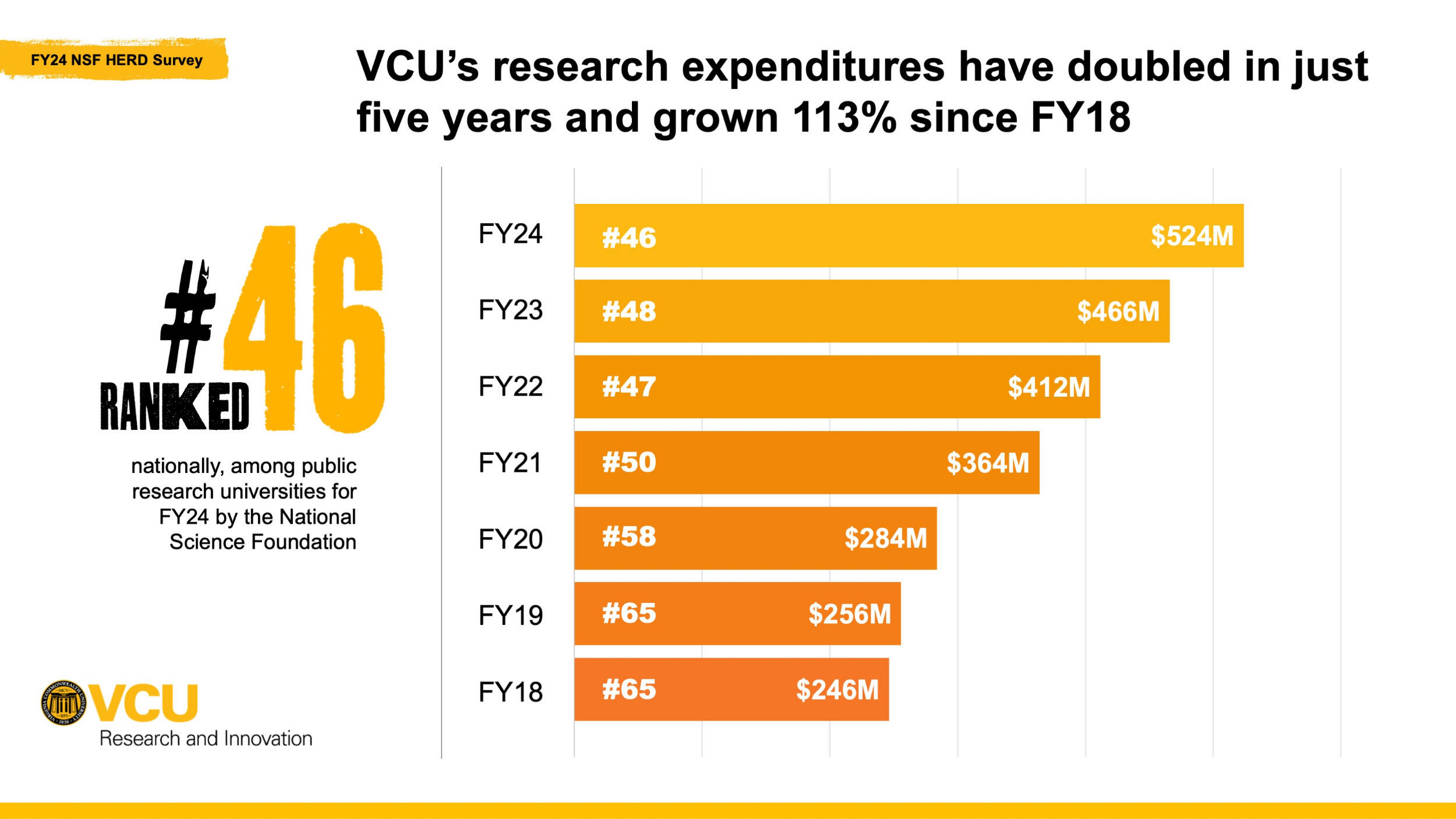
For the first time, Virginia Commonwealth University has crossed the $500 million mark for research expenditures. The total of $524 million for fiscal year 2024 ranks VCU at No. 46 among public universities, according to the annual NSF HERD survey, the nationally recognized and authoritative measure for quantifying research impact at U.S. colleges and universities.
Research expenditures represent actual dollars spent by VCU to conduct all research activities, and the figure includes spending down the university’s external sponsored funding awards, along with its internal investments. These expenditures advance the most innovative research being conducted on all VCU’s campuses, and they support essential research infrastructure – including labs, utilities, regulatory requirements, compliance, safety and research administration – as well as faculty, student and research staff salaries.
In fiscal 2024, VCU’s sponsored funding – the dollar amount of grants, contracts and awards from external sources, primarily federal, state, industry and philanthropic – reached $506 million. (That record was surpassed again recently in fiscal 2025: $568 million.)
Research expenditures is the national recognized measurement of productivity for institutions, as it reflects the true scale and impact of the research being conducted. The VCU research and innovation enterprise has now doubled its expenditures in just five years, making it one of the fastest-growing top 50 public research universities in the country.
In addition to the overall ranking, several of VCU’s focus areas were ranked in the public top 50 in their fields, including:
- Visual and performing arts (No. 1)
- Non-science/engineering fields – humanities, social sciences, art (7)
- Education (13)
- Social work (28)
- Life sciences (36)
- Biological and biomedical sciences (43)
“As a major national public research university, VCU’s mission is to pursue discovery, invention and innovation that benefits humanity and enhances people’s lives,” said President Michael Rao, Ph.D. “We have worked dutifully to catalyze the expansion and increase of our research, as demonstrated by our ranking, because the work of our dedicated, world-class faculty is an opportunity to make a discovery that will improve lives and strengthen our understanding of our world. The research we do for the public good is a vital part of VCU’s future. I look forward to continuing our upward trajectory.”
The newly announced research expenditures figure represents an increase of 12% over fiscal 2023. In addition to growth in federal funding, the increase was accentuated by a focus on collaborations with industry partners, including on clinical trials. In fiscal 2024, VCU was collectively conducting nearly 1,200 clinical research studies with more than 12,000 participants, and that figure included more than 700 designated clinical trials with more than 3,000 participants.
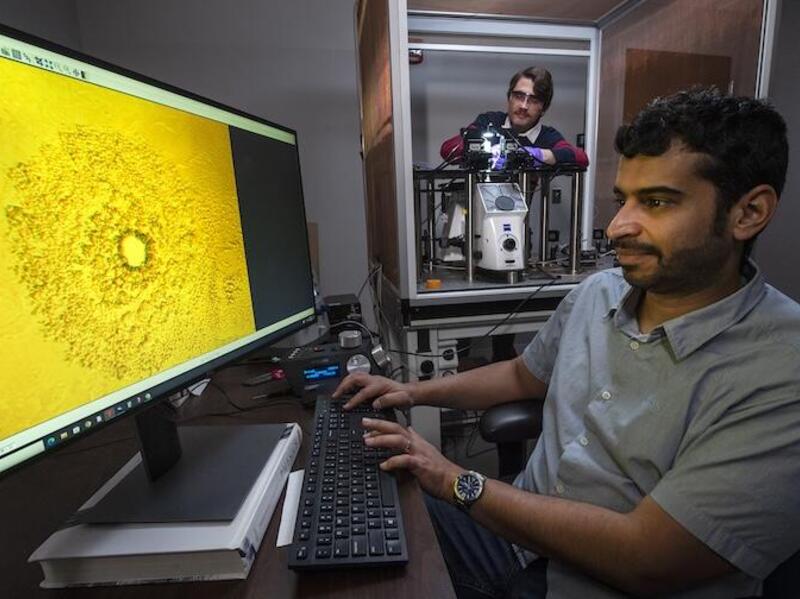
Further growth in fiscal 2024 was tied to a focus on team science and transdisciplinary research projects in VCU’s four strategic research priorities: enriching the human experience, advancing societal well-being, optimizing health, and supporting sustainable energy and environments.
The university’s broad research portfolio included faculty research focusing on:
- Developing a therapy to help treat sickle cell disease (Martin Safo, Ph.D., School of Pharmacy).
- Using robotics to advance concussion recovery (Peter Pidcoe, D.P.T., College of Health Professions).
- Examining the higher genetic risk of PTSD among women (Ananda B. Amstadter, Ph.D., School of Medicine).
- Using data to provide new insight into how ecosystems respond to climate change (Christopher Gough, Ph.D., College of Humanities and Sciences).
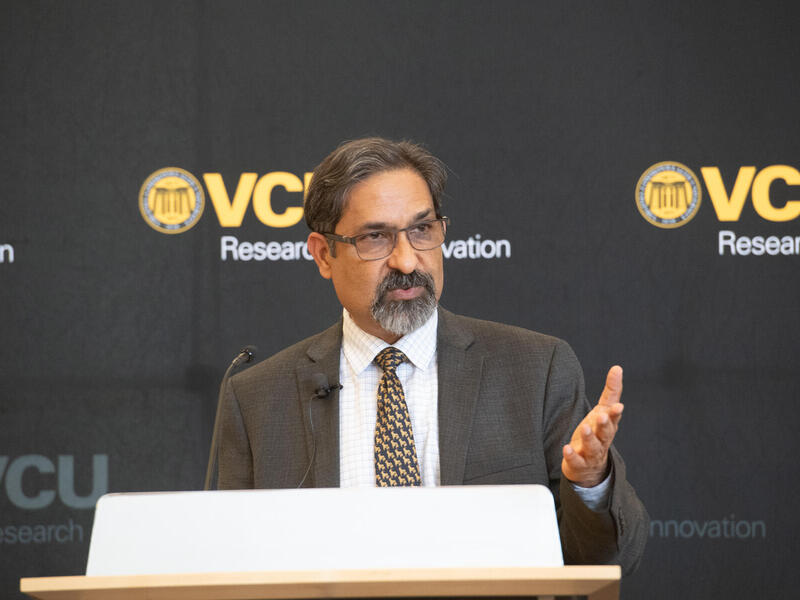
“This institutional record for research expenditures is a direct reflection of the talent, innovation and commitment of each of our research faculty, staff, postdocs and students,” said P. Srirama Rao, Ph.D., VCU’s vice president for research and innovation. “We know that when we invest in the VCU research enterprise, we will get transformational results, and our research is continuing to improve lives throughout Richmond, the commonwealth, the country and around the world. The work we do is crucial, and our reach will only continue to grow.”
The VCU research and innovation enterprise recently introduced 16 research clusters that further advance its four strategic research priorities, as well as enable the university to develop funding mechanisms to recruit and retain the most talented faculty and support team-science-based opportunities to address some of society’s most vexing challenges and pressing needs. These transdisciplinary focuses will also help ensure that VCU’s research is relevant, engaged and has a tangible impact on economic development and crucial issues, solidifying VCU’s role in regional and societal advancement.
The research expenditures in fiscal 2024 also featured advancements and breakthroughs from VCU’s faculty inventors. Through its TechTransfer and Ventures office, VCU set a record with 13 licenses to new startups – the most among Virginia universities. The university honored physicist Massimo Bertino, Ph.D., as Innovator of the Year for 2024 for his patented, safer and more scalable method for producing aerogels, which has been licensed to a startup he co-founded. To further support faculty, VCU launched its first Startup Accelerator program, offering coaching and business strategy to fast-track commercially viable inventions from the lab to the marketplace.
“The groundbreaking research conducted at VCU in the fields of arts, humanities, social sciences as well as the STEM and health science fields is directly addressing some of the greatest needs in Richmond, the commonwealth and around the country and the world,” Srirama Rao said. “Through transdisciplinary approaches, our faculty are proving that there is no better place than VCU to make a direct impact through research.”
Additionally, internal funding helped advance transdisciplinary research, with more than 40 projects each receiving awards ranging from $10,000 to $200,000 in fiscal 2024 from VCU funds that promote expansive exploration.
- The Arts, Humanities and Social Sciences Fund provided support for 10 projects ranging from sculpture and swimwear to pediatric medical care and theater.
- The Breakthroughs Fund funded an additional 10 studies focusing on issues ranging from reducing chronic pain in sickle cell disease patients to identifying gaps in Virginia secondary education curriculums.
- The Quest Fund supported 21 projects ranging from developing therapies for cancer and opioid withdrawal symptoms to creating artificial wetlands for sewage treatment in urban settings.
For the current fiscal 2026, VCU also recently announced the next round for three internal funds, with a fourth to follow in the spring.
Subscribe to VCU News
Subscribe to VCU News at newsletter.vcu.edu and receive a selection of stories, videos, photos, news clips and event listings in your inbox.