Dec. 14, 2006
VCU Student Veterans Association supports the transition from military to student life
Share this story
Carl Hill sensed there were others like him at Virginia Commonwealth University — students making the transition between military and campus life. The Washington state native spent eight years in the Air National Guard and had deployed to Iraq in 2004 before moving to Virginia to pursue a nursing degree at VCU. But Hill didn’t know how many student veterans existed on campus or where to find them. There was no dedicated student organization for veterans at VCU, so he decided to create one.
“The Veterans Affairs Office had a representative here who helped student veterans certify paperwork, but what we really needed was a group to push veterans’ rights and promote veterans’ interests and be a place where student veterans can get together,” Hill said.
Hill went to work, searching for students with short hair, dog tags or other obvious signs of military involvement. He talked to them about getting together. As he built a list of student veterans, he began taking the steps necessary to form an official student organization. The Student Veterans Association was born in January 2005. Homeland Security and Emergency Preparedness Professor William Parrish, a retired Marine Corps colonel, serves as the group’s faculty adviser.
“The Student Veterans Association provides a forum for veterans to share their experiences and lessons they have learned both in service and here at VCU. As in any organization it is the level of participation by its membership that makes it succeed. Hopefully the SVA will mature to become an active and engaging organization comprised of some of America's finest men and women, our veterans,” Parrish said.
Lisa Harmon is another member of the group. Harmon is pursuing a doctoral degree in counseling psychology with an emphasis on health promotion at VCU.
In the army, Capt. Harmon served six years in active duty, leaving just before the Sept. 11 terrorist attacks. She joined the army reserves in 2002. She left VCU after her unit was put on alert for deployment in January 2003. The unit stood down and she returned to school for the summer and fall semesters.
But Harmon’s college career was disrupted again. Her unit was notified of deployment the week before Thanksgiving in 2003. She left in December, one week before the end of the semester. She ultimately served in Iraq from January to December 2004.
Harmon said bouncing back and forth between military life and student life can take a toll.
“My Army buddies couldn’t identify with my college life and my college friends could not understand about being deployed,” Harmon said.
That’s why she is eager to get the word out about the Student Veterans Association.
“It is nonpartisan, nonpolitical and offers an open environment,” Harmon said. “Any student may join. We are open to vets, children of vets, siblings and others interested.”
The group has attracted about 50 members, including a Vietnam veteran, those who served in Desert Storm, veterans of the current conflicts in Iraq and Afghanistan, and members of the ROTC.
“We have a lot of people who aren’t veterans,” Hill said. “They just want to support veterans.”
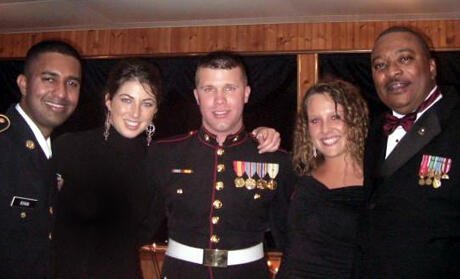
The meetings and an annual military ball in the spring provide opportunities for socializing and support. Adopting students who are deployed is another focus for the group.
“Reaching out to people who may have fallen between the cracks is a real challenge,” Harmon said. “This is a great way to connect with other veterans. You can respond if you see red flags and you don’t always have to be a health professional to see those red flags,” she said.
The Student Veterans Association works closely with the U.S. Department of Veterans Affairs Office in Richmond. George Lamb, licensed master social worker, is Operation Iraqi Freedom/Operation Enduring Freedom outreach coordinator at the local Veterans Affairs Office. Lamb backs the goals of the Student Veterans Association and coordinates a weekly social meeting for student veterans and others.
“Veterans that were deployed can come back and talk about their experience. It’s a pressure free, peer-driven experience,” Lamb said.
“We can also help student veterans get into the system more easily by cutting through some of the red tape.”
To find out more about the group, send an e-mail to VCUSVA@gmail.com.
Subscribe to VCU News
Subscribe to VCU News at newsletter.vcu.edu and receive a selection of stories, videos, photos, news clips and event listings in your inbox.