March 3, 2026
At-home calcium testing device could have wide-ranging impact in health care
Share this story
A glucose monitor, but for calcium.
That’s the simple pitch for a new innovation – out of the Virginia Commonwealth University’s College of Humanities and Sciences – that is on a runway to the marketplace, with the guidance of a Richmond-based startup.
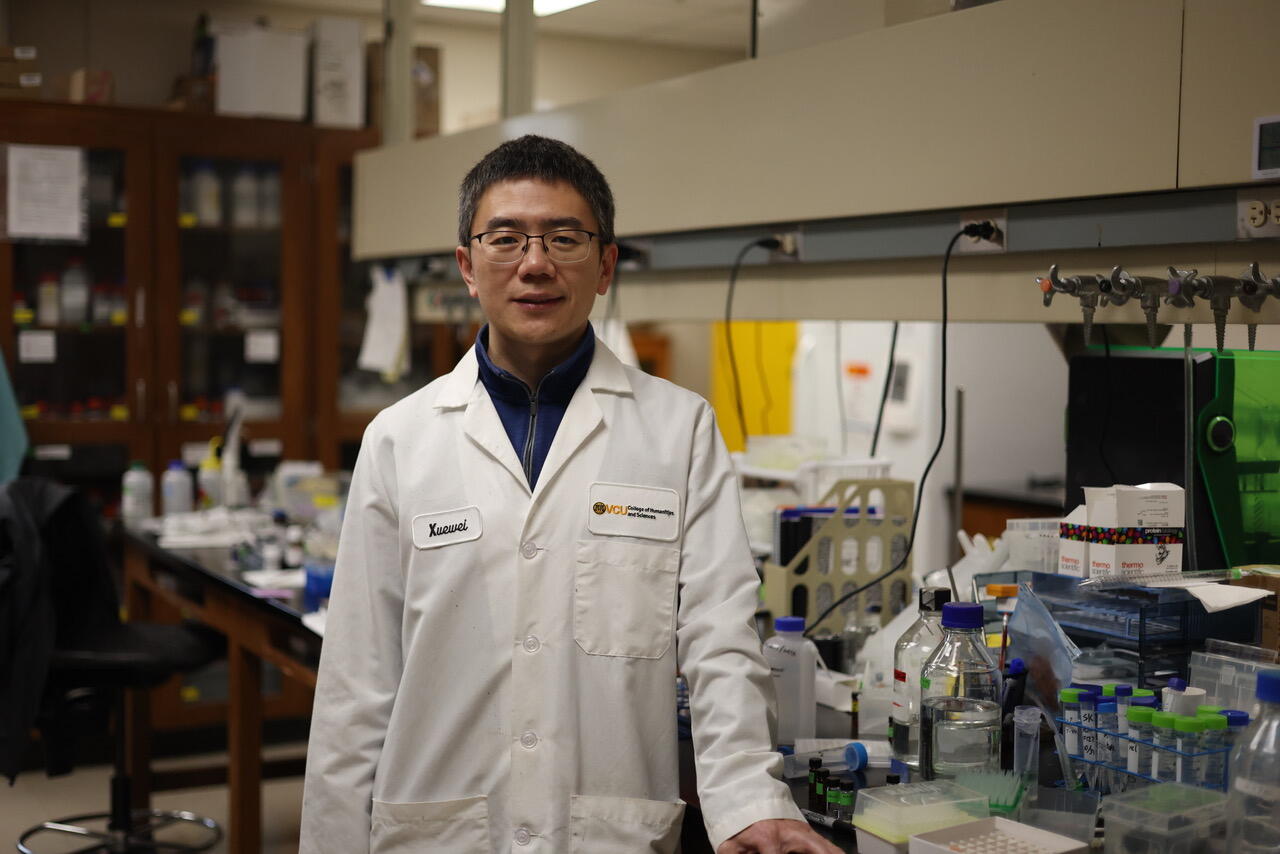
Tralyte Health is in the early stages of commercializing VCU chemistry researcher Xuewei Wang’s creation of a portable, at-home calcium monitoring device for people living with hypoparathyroidism, or hypopara. The company’s option agreement, facilitated by VCU TechTransfer and Ventures, allows Tralyte to evaluate the technology and prepare for commercialization before converting to a full license.
Hypopara causes fluctuations in calcium levels that trigger muscle spasms, neurological symptoms and emergency room visits. Frequent calcium testing is essential, but most patients rely on laboratory blood draws — and thus, delayed results.
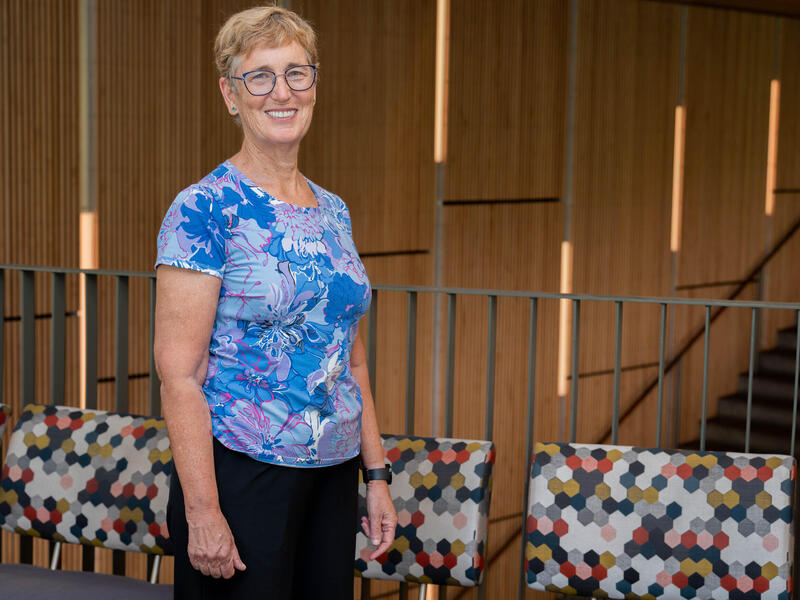
Tralyte co-founder Laurie Head said the condition forces patients into constant uncertainty.
“These patients live every single day on a razor’s edge,” she said. “Hypopara management too often becomes emergency-driven, and it doesn’t have to be that way. If we can give them reliable information at home, it changes everything about how they manage their lives.”
But testing for calcium is only the tip of the technology’s potential.
“This is a platform technology,” said Wang, Ph.D., an associate professor in VCU’s Department of Chemistry. “After we commercialize this one, then we can easily adjust the formulation to make it work for other analytes, like potassium, sodium and magnesium.”
Developing a simple, at-home test
Wang’s device is designed as a fingerstick-based system that pairs a pen-sized reader, disposable sensing chips and, eventually, a smartphone app to measure calcium quickly using a tiny blood sample. Inside the chip, sensing liquids interact with calcium ions and produce a measurable color change. A built-in optical detector captures the result, which is translated into a numerical reading. The process takes about 15 minutes.
Head describes it in familiar terms: “a glucose-monitoring-style experience” for calcium, which supports muscle function, nerve signaling, heart rhythm and bone strength.
Measuring calcium, Wang noted, is a much harder measurement than blood sugar, and until now, there has been no validated, practical home-testing option. His research has been supported by internal and external funding, including grants from the National Institutes of Health, and advanced through peer-reviewed, patent-pending work.
The calcium-sensing technology was among several projects recognized in VCU’s spring 2024 Commercialization Fund awards, an initiative led by TechTransfer and Ventures to accelerate faculty discoveries with strong market potential.
Among members of the Commercialization Board: technology executive Jay Atkinson, who was introduced to Wang through the board and saw the promise of his approach. Atkinson now serves as Tralyte’s CEO, and he said the technology’s potential is matched by the urgency of the clinical need.
“Dr. Wang’s research gave us a platform that can shift care from reactive to proactive,” Atkinson said.
Estimates show hypoparathyroidism impacts around about 100,000 Americans and about 900,000 people worldwide, a market Tralyte says is worth around $1 billion and growing. And while the company’s first focus is hypopara, Wang and Atkinson note that the underlying sensor platform can be adapted for other electrolytes and biomarkers to support care for kidney disease, heart failure and bipolar disorder, as well as emerging care models such as hospital-at-home and rural health services.
Building the company
Tralyte’s clinical and regulatory strategy is led by Rick Siira, M.D., the company’s chief medical officer and an emergency physician. His role is to align product development with how care is delivered in real-world settings.
Tralyte is the first company for Wang, who joined VCU in 2019 after his postdoctoral training at the University of Michigan. The calcium-detection system has been a primary focus of Wang’s lab, which includes a team of about a dozen students and postdoctoral fellows developing ultrasensitive chemical sensors for both at-home disease management and real-time hospital monitoring, including for electrolytes, metabolites and drugs.
His team continues to improve the accuracy of the reader and its ease of use. The company also has a manufacturing partner in North Carolina that is designing a more compact device.
“As a scientist, I always think about how to make it better,” Wang said. “I am confident in the technology’s potential, but we need to remain mindful of potential pitfalls to mitigate risks throughout commercialization. This is a medical device that will guide medical decisions. We have to ensure it is accurate and reliable.”
But for Wang, the journey from lab bench to startup has reinforced why he pursued research in the first place.
“This is why we are scientists. My ultimate goal is to make something real, and to have something that is useful,” he said. “Patients and physicians have been waiting for this for a long time. If we can make this a reality, and patients really benefit from it, I will be very proud of that.”
Subscribe to VCU News
Subscribe to VCU News at newsletter.vcu.edu and receive a selection of stories, videos, photos, news clips and event listings in your inbox.