Nov. 19, 2025
How I found my research: Dickson Donu joins the battle against malaria
Share this story
How I found my research is an occasional series featuring VCU students sharing their journeys as researchers.
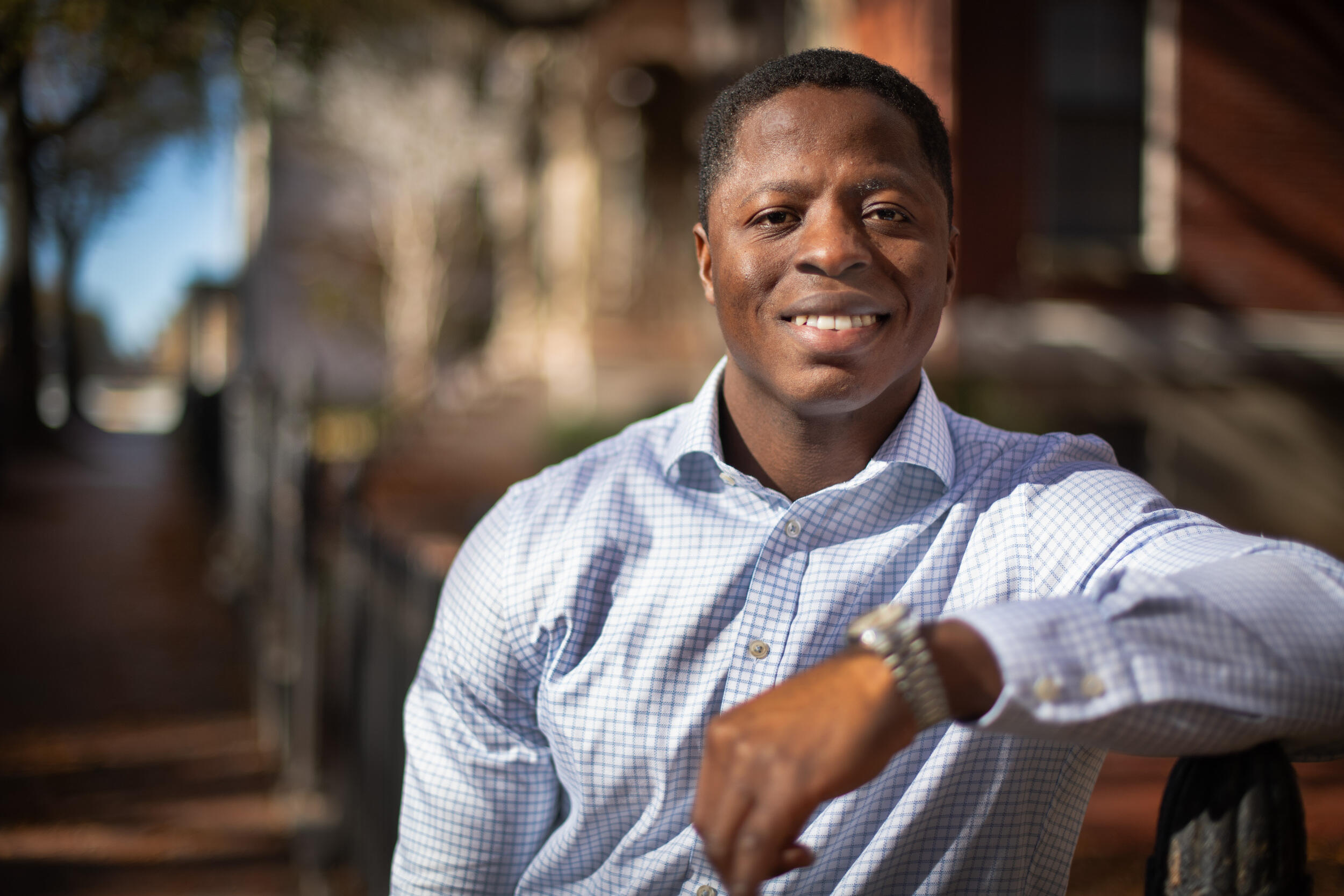
When Dickson Donu arrived at Virginia Commonwealth University in January 2021, he already knew he wanted to pursue the development of novel antimalarials. Donu had previously served as a research assistant at the Noguchi Memorial Institute for Medical Research in his native Ghana, and he hoped to build on the work he had done there at VCU.
Nearly five years later, Donu has accomplished what he set out to do. While working in the lab of Yana Cen, Ph.D., associate professor of medicinal chemistry in the School of Pharmacy, Donu has published 27 research papers on a range of topics, including studies assessing the prevalence of malaria and the development of new medications to treat or prevent malaria. He will earn his Ph.D. in pharmaceutical sciences with a concentration in medicinal chemistry next month.
VCU News spoke to Donu about the motivation behind his work and his appreciation for the formidable challenges of conducting complex research.
Tell us the focus of your research ... and why it is important/impactful for all of us.
My research here at VCU is focused on targeting the Plasmodium falciparum Sir2 enzyme for the development of novel antimalarial agents. This strategy is critical for addressing the persistent emergence of drug-resistant parasite strains that threaten the efficacy of existing malaria therapies.
What inspired you to pursue this line of research?
My interest in malaria research began with a foundational, first-hand experience in medical research at the Noguchi Memorial Institute for Medical Research in Ghana. I was privileged to participate in projects that assessed malaria prevalence and the complex challenges associated with its eradication across Ghana and the broader Sub-Saharan African Region. Critically, witnessing the potent antimalarial properties of phytochemicals solidified my commitment to exploring and contributing to the development of new antimalarials.
Tell us about a surprise in your research journey.
I initially viewed the goal of selective drug targeting by exploiting subtle differences between organisms as a theoretically far-fetched concept. It wasn't until I began working directly on my research project that I experienced the profound surprise of seeing this phenomenon come to life. The progress in my research so far has shown that even minute biological variations could be definitively exploited to achieve selectivity, a realization that reframed my entire understanding of attainable molecular goals.
Tell us about an obstacle or challenge you had to overcome in your work.
Transitioning into a new environment has been challenging, requiring significant cultural and logistical adaptation. Beyond navigating a new academic system, lifestyle, and the initial isolation of relocating, establishing both my research and a routine proved overwhelming. I quickly had to become resourceful and independent, efficiently adapting established experimental protocols to ensure continued progress in my research. Successfully overcoming this initial barrier of relocation and unfamiliarity ultimately strengthened my problem-solving agility and broadened my exposure, an adaptation process that was greatly aided by the supportive connections I forged within the community, such as with my "workout friends" at the MCV recreational center.
Is there a memorable partnership or lesson you've embraced along the way?
The advancement of my career has been significantly supported by key partnerships and mentorships. Linda Eva Amoah, Ph.D., who served as both my initial undergraduate research supervisor and later my boss at the Noguchi Memorial Institute for Medical Research, has significantly inspired the progress I’ve made thus far. Additionally, the collective guidance and diverse insights provided by my Ph.D. project supervisor, Yana Cen; the members of my graduate advisory committee; and the faculty at the Department of Medicinal Chemistry here at VCU have been instrumental in shaping me into the researcher I have become.
What do you find fulfilling about the research process?
The most fulfilling aspect of my research is the potential for real-world impact. My greatest satisfaction comes from finding solutions to unsuccessful experiments and understanding the basis of observed results. These experiences have enhanced my intellectual tenacity and enabled my navigation of the unknown to provide meaningful contributions to the scientific community.
What advice would you offer undergrads to kick-start their own research journeys?
One piece of advice that has profoundly shaped my outlook comes from Kwadwo Asamoah Kusi, Ph.D., an associate professor in the Noguchi Memorial Institute for Medical Research: “In life, pursue a career that you would still love to do, even if you were not paid to do it.” I believe that finding this intrinsic motivation is the key to achieving real happiness, which ultimately guides my life choices. Most importantly, finding the right mentor is the foundational step toward achieving excellence, providing the necessary guidance and support to thrive in one's chosen path.
Subscribe to VCU News
Subscribe to VCU News at newsletter.vcu.edu and receive a selection of stories, videos, photos, news clips and event listings in your inbox.