March 4, 2026
cRam Session: The Future of Work
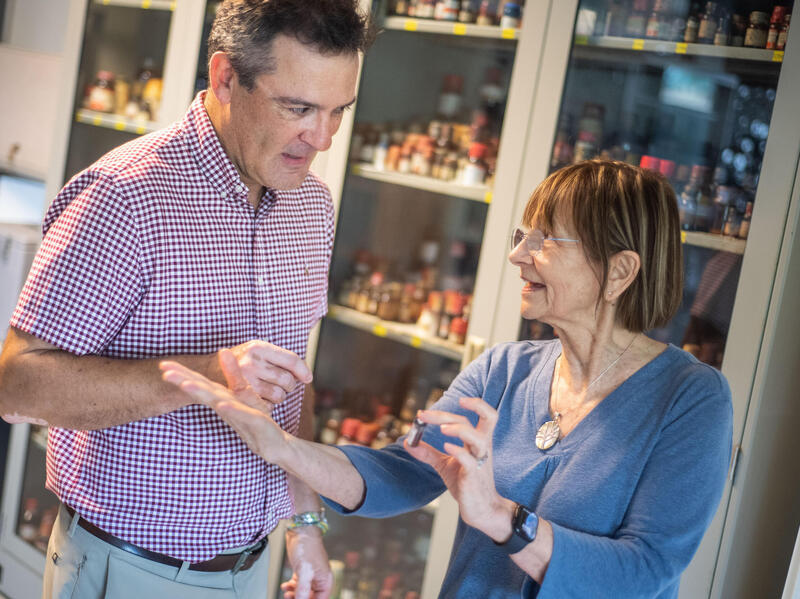
cRam Session is a VCU News feature that highlights the breadth of offerings in the VCU Bulletin course catalog and the wide-ranging expertise of the instructors. Associate professor Virginia Wray Totaro teaches in the Department of Focused Inquiry in the College of Humanities and Sciences, and she is the director of general education for Academic Affairs in the Office of the Provost. ConnectED, VCU’s general education program, serves all students by helping them develop critical thinking skills and a more rounded view of the world. She shares quick insight from her course The Future of Work.
Give us an insightful connection between past and present on this subject.
Studying past labor patterns gives students a framework for thinking about how work changes and how it endures. We begin the semester with selections from “The Story of Work,” by Jan Lucassen, to ground students in the historical foundations of work.
By examining earlier technological disruptions – such as automated textile machinery in the 19th century and the rise of the internet in the late 1980s and early 1990s – students see that today’s debates are not entirely new. Looking at these shifts through a macro lens – economic, social, cultural and political – helps students understand how technological innovation reshapes not just jobs but institutions, identities and daily life.
An interdisciplinary grounding allows us to approach today’s impact of generative AI on work with greater perspective. Rather than treating it as an unprecedented break from the past, students analyze it as part of an ongoing pattern of disruption and adaptation.
What is your favorite assignment you have students do?
An early team project has students select a film from a specific era in U.S. history and analyze it as a lens into the evolving “world of work.”
Rather than treating movies as entertainment alone, students dissect them for historical, social, cultural and political insight. Films such as “Modern Times,” “Hidden Figures,” “Wall Street,” “Office Space” and “Nomadland” spark rich conversations about automation, diversity, financialization, technological alienation and labor market transformation.
The Future of Work course was initially part of a transformative-learning initiative to increase project-based learning in ConnectED. I love this film assignment because it immediately builds community, sharpens critical thinking and helps students see work not just as a future job but as a powerful social force shaping American life, which sets the stage for the real work of the course.
What is a significant development related to your course’s subject?
A significant trend shaping the future of work is the rising value of distinctly human capacities in an era of accelerating technological change. Employers are increasingly prioritizing skills that technology cannot easily replicate: critical thinking, ethical judgment, empathy, collaboration, adaptability and creative problem-solving.
Research from the Center on Education and the Workforce at Georgetown University reinforces that future long-term career mobility depends on strong interpersonal, cognitive and analytical abilities. Employers consistently report seeking graduates who can communicate clearly, navigate ambiguity, work across differences and make sound decisions in complex environments.
In my course, we examine how a broad-based education – particularly in the humanities, social sciences and arts – intentionally cultivates these durable skills. Undergraduate education is not simply workforce training; it is preparation for thoughtful participation in a rapidly evolving society. The most significant development is a renewed recognition that human-centered skills are not secondary to innovation – they are essential to it.
A new general education course – IDST 210: Microinternships and Career Design, which is being planned for spring 2027 – builds on my Future of Work course. In the new one, students will practice these transferable, AI-proof skills in the context of three small internship experiences, working with each other, across disciplines, to complete industry-hosted projects.
Subscribe to VCU News
Subscribe to VCU News at newsletter.vcu.edu and receive a selection of stories, videos, photos, news clips and event listings in your inbox.